Community Cat Management Should Adapt to Municipalities — Not the Other Way Around
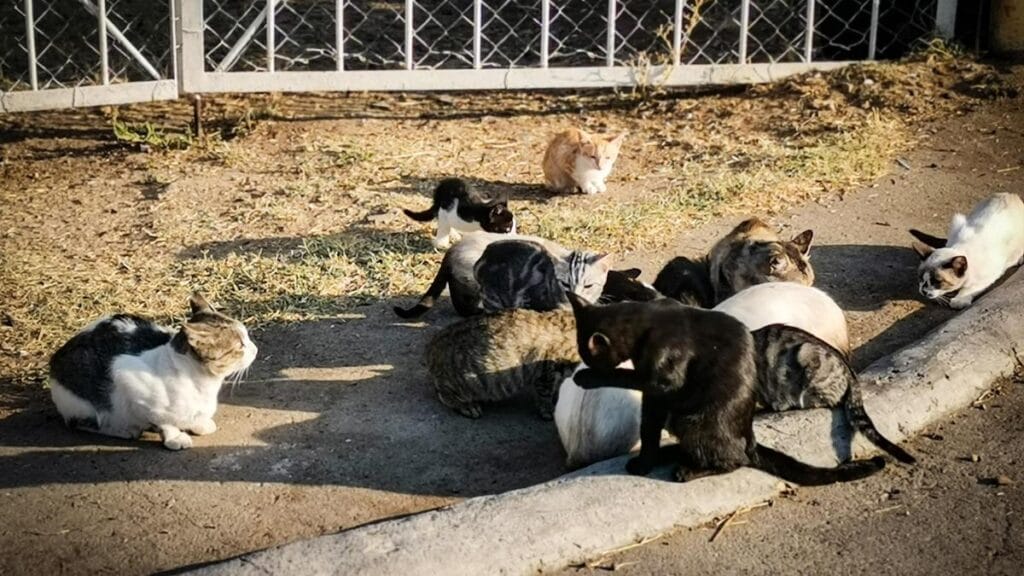
Community cat management does not function the same way everywhere. Every municipality, volunteer network, and TNR program (Trap–Neuter–Return) operates under different realities, resources, and local dynamics.
Alley Cat Allies – Step-by-Step Guide to Trap-Neuter-Return
Yet many digital solutions are still designed with the same rigid approach: the software is installed, a license is delivered, and municipalities are expected to adapt themselves to the platform.
At Meow Metrics, we believe the opposite.
Municipalities and animal welfare organizations should not have to adapt to a community cat management platform. The platform should adapt to them.
And that changes the way technology should be understood within municipal animal welfare management.
Why Many Digitalization Processes Fail
Digital transformation is becoming increasingly necessary for municipalities managing:
- community cat colony censuses;
- TNR campaigns;
- volunteer coordination;
- veterinary follow-up;
- incident reporting;
- grant documentation;
- and compliance with Spain’s Animal Welfare Law 7/2023.
However, digitalization is not simply about transferring information into software.
The real challenge appears when technology fails to understand how municipalities and volunteer networks actually work on the ground.
Some municipalities rely on highly experienced volunteers coordinating through messaging groups and spreadsheets. Others involve multiple departments, veterinary clinics, and complex administrative structures.
Assuming every municipality operates identically often leads to:
- resistance to change;
- duplicated work;
- operational frustration;
- and abandonment of the platform itself.
The problem is rarely the people.
The problem is usually the implementation.
No Two Municipalities Are Identical
Community cat management is often discussed as though it were standardized.
In reality, every territory is different.
Some municipalities are small or rural, where TNR programs depend heavily on a few volunteers with deep local knowledge.
Others are large urban environments involving dozens of colony caregivers, veterinary clinics, municipal technicians, and more complex coordination systems.
Between these realities, there are countless operational models.
That is why Meow Metrics was designed as a flexible platform capable of adapting to different municipal realities — not forcing everyone to work in exactly the same way.
Because successful community cat management always depends on understanding local context first.
More Than a Software Platform
At Meow Metrics, we do not simply deliver software access and disappear.
We believe implementation requires support, adaptation, and operational understanding.
Every implementation includes a support and adaptation phase where we work directly with municipalities and organizations to understand:
- how teams coordinate;
- which workflows already exist;
- what information is genuinely useful;
- and which processes need simplification.
This support is included as part of the service.
There are no hidden implementation costs or separate consulting fees.
Because we believe support is part of the work itself.
A Collaborative Platform for Municipalities and Volunteers
One of the biggest challenges in community cat management is communication.
Not because of a lack of commitment — but because information becomes fragmented between:
- messages;
- phone calls;
- scattered photographs;
- personal notes;
- and informal conversations.
Over time, this creates exhaustion and invisibility, especially for colony caregivers whose daily work often goes undocumented.
Meow Metrics was specifically designed to solve this problem.
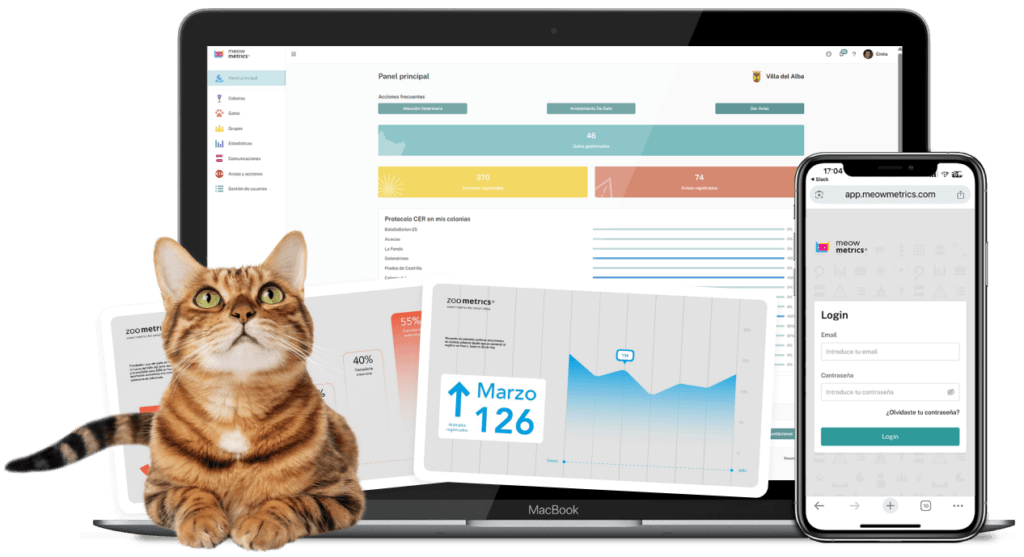
The platform allows municipalities, volunteers, veterinarians, and organizations to work around the same shared operational reality.
Among other functions, users can:
- register interventions;
- track incidents;
- maintain updated censuses;
- coordinate TNR campaigns;
- share information in real time;
- document volunteer activity;
- and generate reports and indicators.
This creates an important transformation.
Work no longer depends on fragmented conversations or memory alone.
Information becomes structured, traceable, and useful for long-term management.
Data That Helps Municipalities Make Better Decisions
Ethical community cat management requires more than opinions.
It requires data.
Municipalities increasingly need reliable information to:
- monitor colony evolution;
- identify recurring incidents;
- justify budgets;
- apply for grants;
- and demonstrate measurable results.
Traceability is no longer just a technical detail.
It has become a governance tool.
And also a tool for recognition.
Because data gives visibility to the enormous amount of work already being carried out daily by volunteers and municipal teams.
Technology Works Best When It Listens First
Technology is useful.
But only when it listens first.
In animal welfare management, digital tools only create real value when they recognize that behind every workflow there are real people, local dynamics, and years of accumulated experience.
That is why Meow Metrics does not believe in rigid systems.
We believe in listening, adapting, and building together with the people already working on the ground.
Because managing community cat colonies is not simply about having software.
It is about having the right tools — and the right support — to help municipalities, volunteers, and organizations work better together.
https://www.alleycat.org/resources/trap-neuter-return-research-compendium/?utm_source