Community cat population calculator
Project how a colony may evolve with and without TNR, and how many sterilizations a year it takes to reach 80 % per colony.
Use the calculator
Developed by Zoometrics (opens in a new tab)

Bring Meow Metrics to your city.
Would you like Meow Metrics to support the care of community cats in your city?
Tell us what you need.
municipalities, districts and associations trust Meow Metrics

City councils and organizations that already choose us
Client municipalities, districts and associations
Registered colonies
Registered cats
Users
Registered actions
Registered alerts
Estimated volunteer hours
Countries









































MEOW METRICS - FELINE COLONIES APP
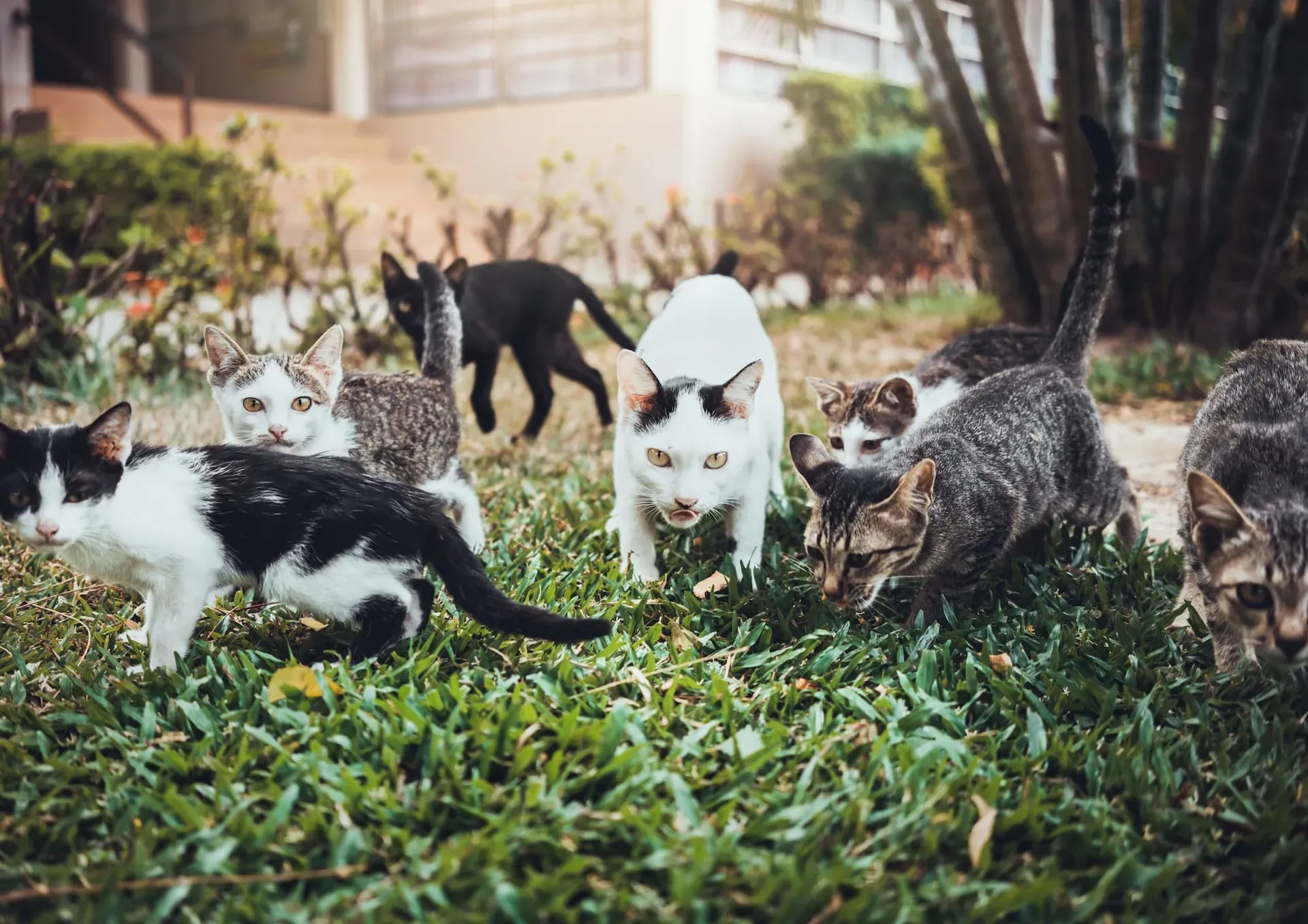
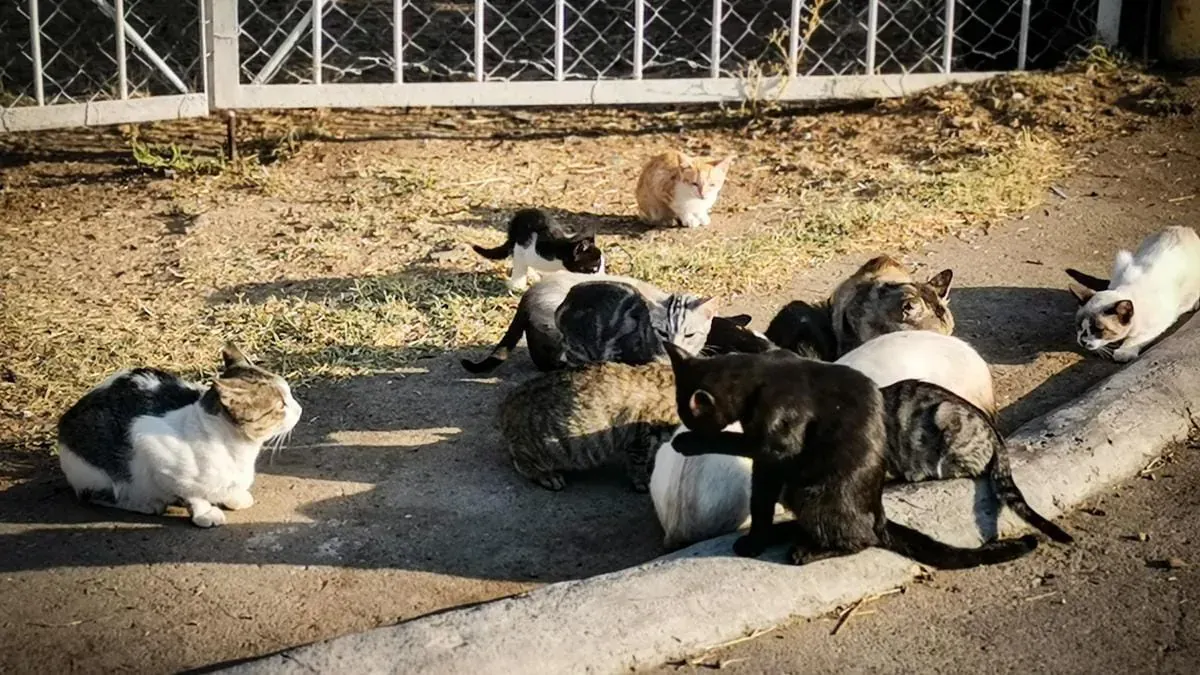
Cat colonies are groups of communal cats that share a territory and live together in stable communities in streets, parks, neighborhoods, and other urban spaces.
They are part of the everyday landscape of cities. They are adapted to urban life and present in communities all over the world. They are not an isolated phenomenon, but a living part of the city and its biodiversity, neighbors with whom we live every day.
THE CHALLENGE
When colonies are not properly managed, health issues, uncontrolled reproduction, and community conflicts can arise.
However, when they are cared for and ethically managed through programs such as TNR (Trap-Neuter-Return), colonies stabilize and coexistence improves.
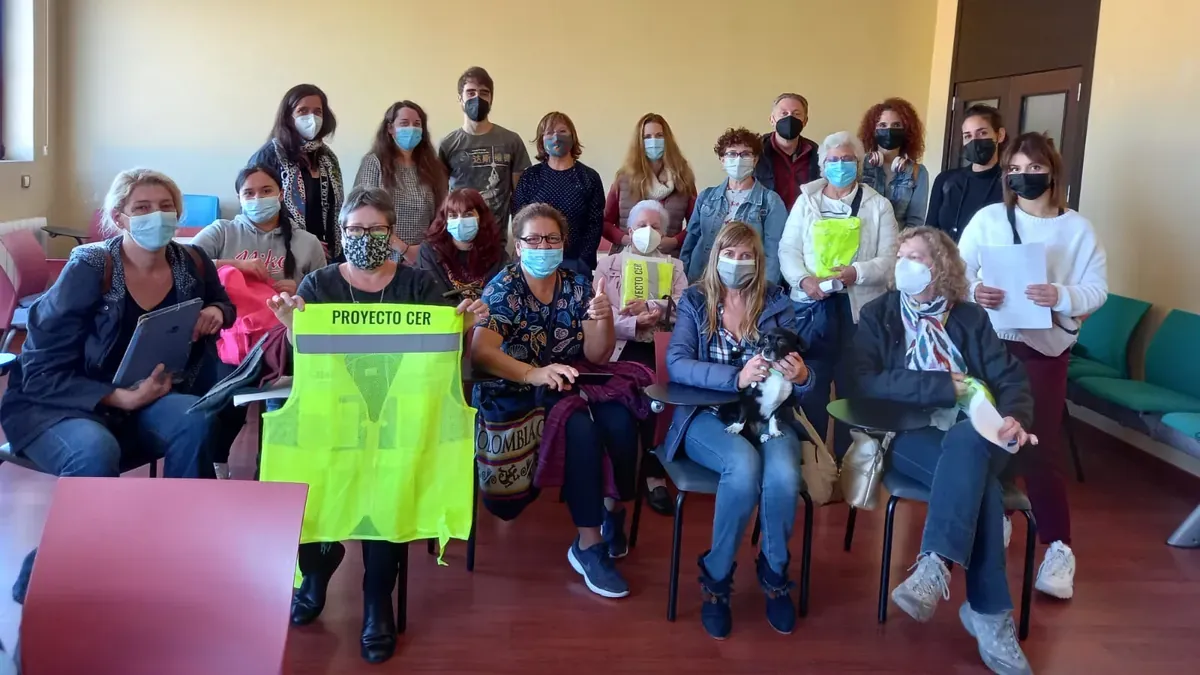
In practice, this management is largely carried out by committed individuals and organizations, who sustain the day-to-day work on a voluntary basis.
In recent years, municipalities and governments have also begun to provide support, driven by new regulations related to sustainability, animal welfare, and public health.
Community cats in Spain (2024 estimate).
Estimate based on data from 1,128 municipalities. Source: Luzardo et al., Animals, 2025. It is a model, not a census.
Estimated cat colonies in Spain (2024).
About 125,000 colonies in the model (125,561). Source: Luzardo et al., Animals, 2025. The authors warn that some colonies may be unregistered.
Drop in cat population with the TNR method, according to published studies.
In real colonies with high sterilisation coverage: −85% over 23 years on a university campus (Spehar and Wolf, 2019); −99% over 16 years on a coastal trail (Spehar and Wolf, 2020); −48% in 18 months in a colony of 157 cats, and −28% if adoptions are not counted (Junqueira and Galera, 2024). If new cats keep arriving, a colony can grow.
MEOW METRICS - NEW REGULATIONS
In recent years, the care of community animals has moved beyond an informal practice to become a responsibility recognized by law.
This shift integrates their management into urban public policies, linking it to animal welfare, public health, and coexistence in cities.

In the public sector, grants and funding programs are available to support municipalities in the responsible management of feline colonies, including sterilization efforts, health monitoring, and territorial coordination.

At the European level, animal welfare is part of a broader agenda linked to sustainability, public health, and urban coexistence.
This approach recognizes that the responsible care of community animals is also a key component of more sustainable and resilient cities.

Ley 7/2023 de bienestar animal (Spain’s Animal Welfare Act) recognizes community cats and promotes their ethical management through TNR programs.
The regulation encourages responsible management models in which municipalities, organizations, and individuals share an active role.
Caregivers and Guardians
Those who are there, every day.
They don’t wear capes or seek applause, but they are our heroes.
Caregivers and guardians play a key role in the management of feline colonies, bridging care, territory, and decision-making that impact animal welfare and urban coexistence.

What does colony care involve?
Managing a feline colony is not just about feeding. It is ongoing work that combines observation, organization, decision-making, and dialogue with the surrounding community.


Daily
care

Observation and
monitoring

Health and
population control

Record-keeping
and organization
Civic commitment requires tools, information, organization, and support to succeed in this mission.
That’s why we created Meow Metrics.

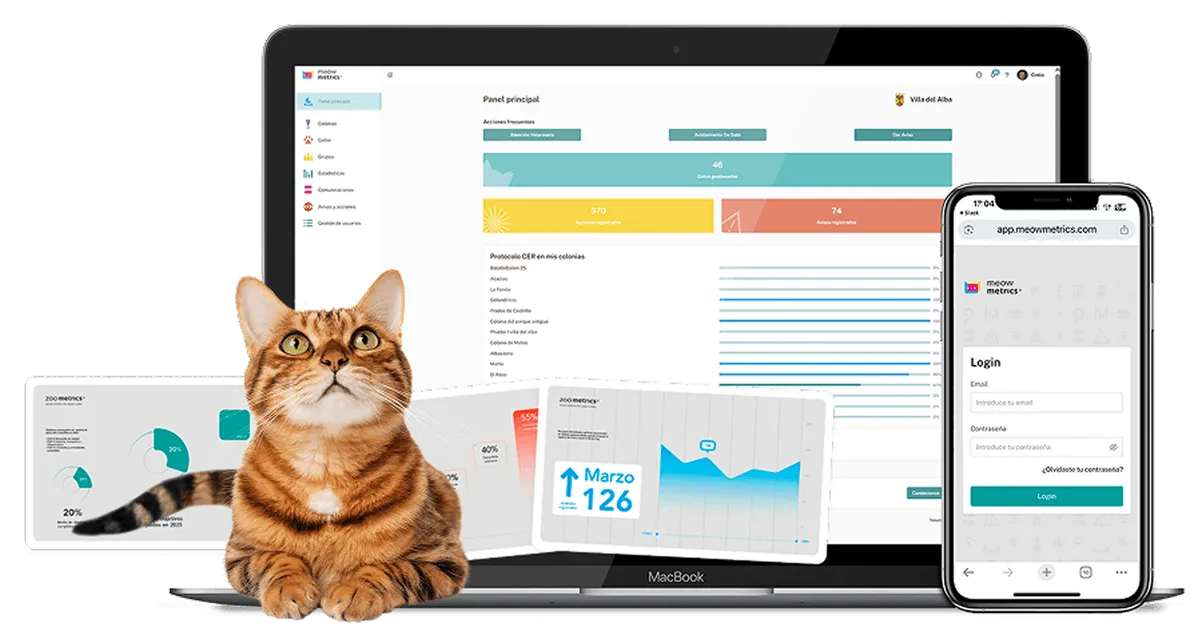
Meow Metrics is a digital platform that enables the recording, organization, and monitoring of feline colony and community cat management in urban environments.
It is designed to support the work of guardians, organizations, and municipalities by facilitating coordination, information tracking, and data-driven decision-making.
From individual tracking of each cat and colony to city-wide management, Meow Metrics helps transform day-to-day work into clear, traceable, and shared information, strengthening collaborative and responsible management models.
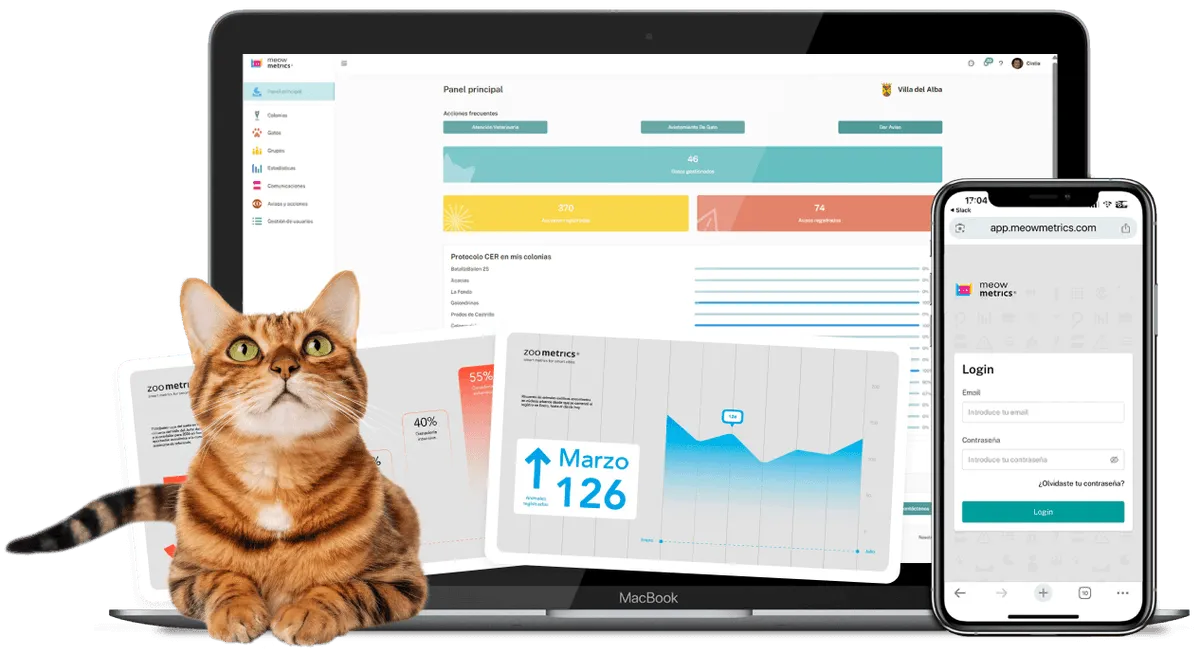

All colony information, organized in one place.
Records of colonies, community cats, health statuses, and actions taken—providing a clear and continuous view of care across the territory.

Clear information to support responsible decisions.
Tracking, history, and data visualization that help plan, prioritize actions, and support day-to-day management with reliable information.

A shared space for networked care.
It facilitates coordination between guardians, organizations, and municipalities, promoting shared work and the collective construction of care.

Care that is recorded, visible, and supported.
Each action is documented, strengthening transparency, continuity of work, and alignment with legal frameworks and public and civic programs.
The technology we develop is rooted in real-world urban management and volunteer work.


ABOUT MEOW METRICS
Meow Metrics is an initiative by Zoometrics, a company contributing to a new vision of how urban biodiversity can be understood and cared for.
We start from a simple conviction: nature also lives in the city.
In our streets, parks, and neighborhoods, biodiversity is part of everyday life and shared well-being.
We work from a shared governance perspective, where citizens, volunteers, organizations, technical professionals, and governments all play an active role, supported by a common evidence base to build responsible solutions.
We give visibility and value to the work of those who care every day—often invisibly—and we develop tools that make this work recognizable, measurable, and a central part of urban policies.
We want to be part of the evolution Europe is driving today: more sustainable, resilient, and fair cities, where animal welfare, public health, and urban coexistence are understood as part of a single system.
Meow Metrics is one of the first modules of this vision, a building block within a broader suite designed to care for life in the city.
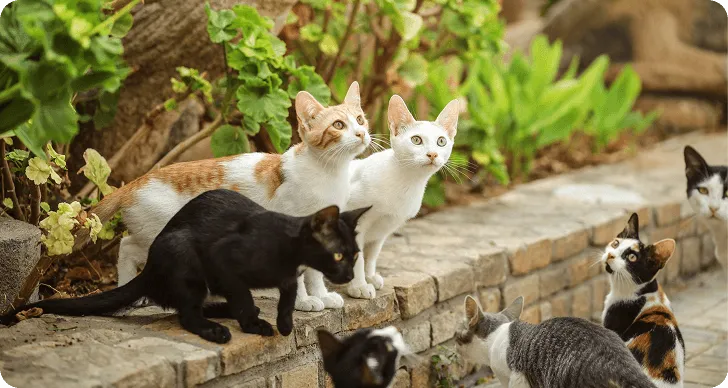
The ethical management of feline colonies contributes to more sustainable, healthy, and participatory cities.
Zoometrics and Meow Metrics align with the Sustainable Development Goals (SDGs) 3, 11, 15, and 16, as well as with animal welfare legal frameworks in Spain and Europe, providing data and tools to support their effective implementation on the ground.






Free tools
If you have no resources, you can start today: project how the population of your colonies may evolve and keep your census in a template. And if one day you move to Meow Metrics, you do not start from scratch: send us your census and we enter it for you.
Project how a colony may evolve with and without TNR, and how many sterilizations a year it takes to reach 80 % per colony.
Use the calculatorAn Excel data template based on our functional model to record colonies, cats and interventions and see the percentage of sterilized cats per colony.
Download the templateMeow Metrics prepares your municipality’s management plan for you, adapting it with your own data.
See the management planSuccess stories
Municipalities from 249 inhabitants (Ullastret) to 735,129 (Zaragoza) that run their TNR program with Meow Metrics.

Municipality of El Puig de Santa Maria (Valencia)
9,490 inhabitants
Data as of
View success story: Municipality of El Puig de Santa Maria (Valencia)
Municipality of Yebes (Guadalajara)
5,637 inhabitants
Data as of
View success story: Municipality of Yebes (Guadalajara)
Municipality of Carrión de Calatrava (Ciudad Real)
3,300 inhabitants
Data as of
View success story: Municipality of Carrión de Calatrava (Ciudad Real)
Municipality of Getafe (Madrid)
193,238 inhabitants
Data as of
View success story: Municipality of Getafe (Madrid)Municipal coats of arms: Wikimedia Commons, CC BY-SA 3.0 and 4.0 licences (author and details on each file). Organization logos: courtesy of each organization.
Frequently asked questions
Short answers about the free account, cost, data privacy and how to get started.
Meow Metrics is a platform to manage cat colonies with the TNR method, in accordance with Spain’s Law 7/2023. It is developed by Zoometrics, founded by Diana Barrantes and Juan Manuel Taboada Álvarez.
Yes: the free account (“free user”), for one person, with their data kept private.
The price is given after a demo and depends on the population and the modules.
You send us your census and we enter it, or we give you a template for you to fill in, whichever is easier for you.
They are private: only people authorized by the municipality or the association can see them; in the free account, only the account holder.
Meow Metrics is available in 12 languages: Spanish, Catalan, Galician, Basque, Valencian, Aragonese, English, German, Italian, French, Arabic, and Korean.
Yes: it is an installable web app (PWA), adapted to any screen size and accessible from any device with an internet connection.
Yes, for associations and municipalities: documents and reports (grant and technical reports) and a monthly report by email.
MEOW METRICS COMMUNITY
Learn, share, and care as a network.
Guides, stories, and resources created together with guardians, organizations, and communities working toward the responsible care of community cats in the city.
Practical resources to organize the daily care of feline colonies. Clear guides, based on real-world experience in the field, designed to support responsible and sustainable decision-making.
Clear information on laws, regulations, and obligations related to the management of feline colonies and community cats. Straightforward answers to help understand the legal framework and act with proper support.

First-person stories from those who sustain the daily care of community cats.
Real experiences that make visible the work, commitment, and day-to-day challenges.
Last notes and resources

Bring Meow Metrics to your city.
Tell us what you need and we’ll get in touch.
We use technologies the site needs to work (for example, remembering your choice) and, only if you accept, analytics cookies (Google Analytics 4) to measure visits and improve our services. You can withdraw or change your consent at any time under “Manage consent” at the bottom of the screen.