Community Cat Management in Spain Depends Largely on Daily Work That Rarely Appears in Any Official Report
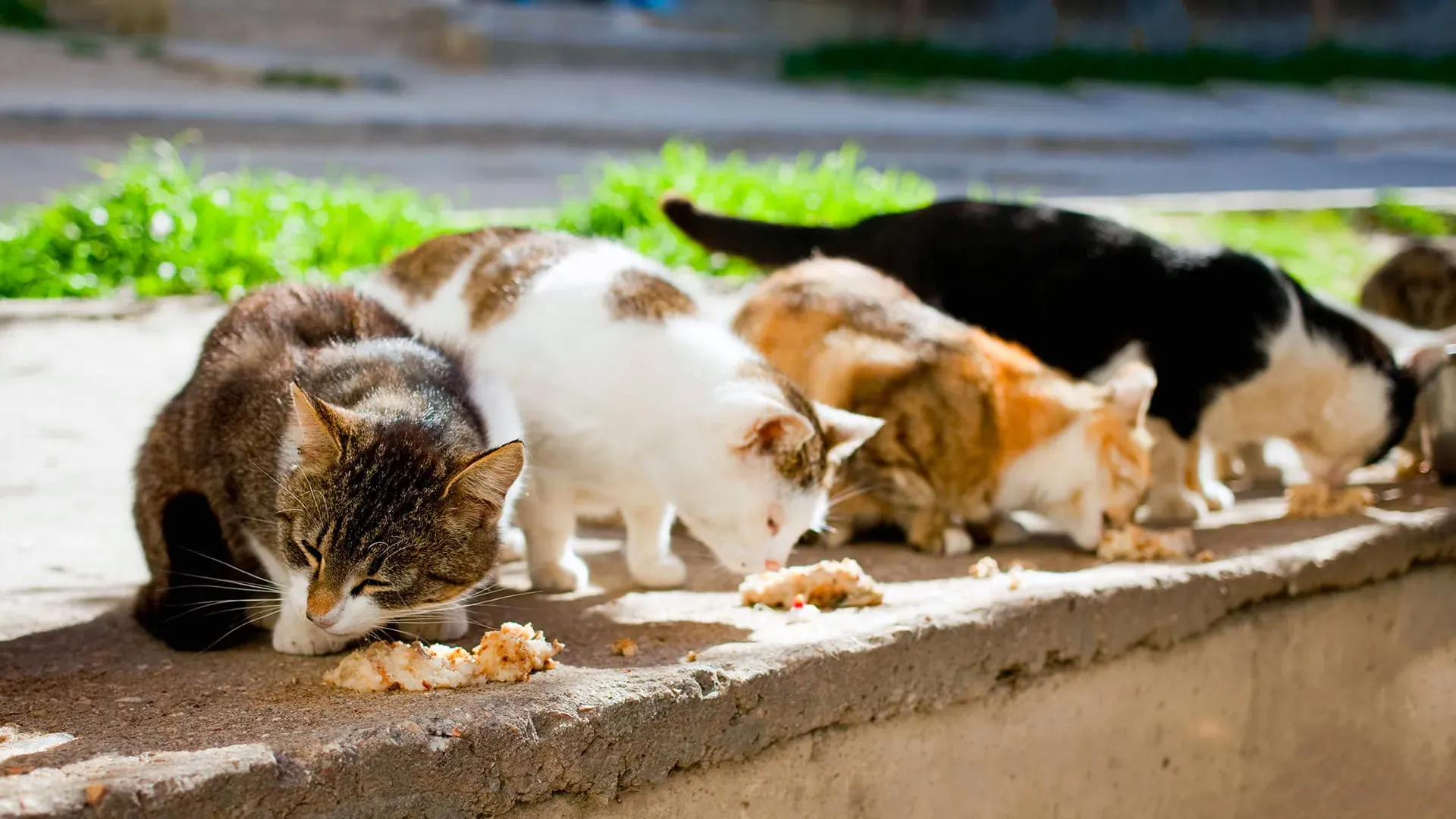
Hours spent feeding colonies.
Traveling between colony locations.
Waiting during TNR (Trap-Neuter-Return) captures.
Transporting cats to veterinary clinics.
Trap–Neuter–Return operations.
Cleaning feeding stations.
Providing special care for injured cats or animals requiring medication.
Temporary foster care before or after surgery.
Speaking with neighbors and explaining TNR programs.
Thousands of small daily tasks sustain the welfare of community cats… yet most of this work is rarely documented.
And when work is not measured, it often appears as though it barely exists.
That is why one of the greatest challenges in ethical community cat management today is not only the lack of resources or volunteers. Very often, the real problem is that the enormous effort made by volunteers remains invisible.
The Invisible Work Behind Community Cat Colonies
From the outside, many people imagine that managing a cat colony simply means “feeding cats.”
But the reality is far more complex.
Colony caregivers carry out continuous monitoring and management tasks that include:
- monitoring health conditions;
- identifying new cats;
- tracking litters;
- detecting illnesses or injuries;
- following sterilization processes;
- coordinating TNR captures;
- administering medication;
- updating colony censuses;
- mediating neighborhood conflicts;
- and communicating with municipal services.
In many municipalities, volunteers also hold most of the real knowledge about local colonies.
They know which cats are missing.
Which animals have recently appeared.
Which colonies urgently require veterinary attention.
Which areas are experiencing population growth.
And yet, most of this information remains scattered across WhatsApp messages, personal notes, or informal conversations.
It is not recorded.
It is not quantified.
It is not visible.
What Is Not Recorded Appears “Minor”
This creates important consequences.
When municipalities try to evaluate the real scope of community cat management, they usually only see a small part of the work:
- sterilization numbers;
- veterinary expenses;
- invoices;
- or partial census data.
But something essential is almost always missing:
the human time invested.
And that completely changes the perception.
Without reliable data about volunteer hours, it becomes extremely difficult to understand:
- how much work is required to keep a colony stable;
- how much time volunteers truly dedicate;
- how many interventions are carried out every month;
- and what daily workload colony caregivers actually sustain.
As a result, the effort often appears much smaller than it truly is.
And this makes it far more difficult to justify:
- institutional support;
- municipal resources;
- volunteer assistance programs;
- larger TNR campaigns;
- insurance and training;
- digital coordination tools;
- and public grants or technical funding reports.
Tracking Hours Transforms Invisible Work into Real Data
This is where digitalization can make a major difference.
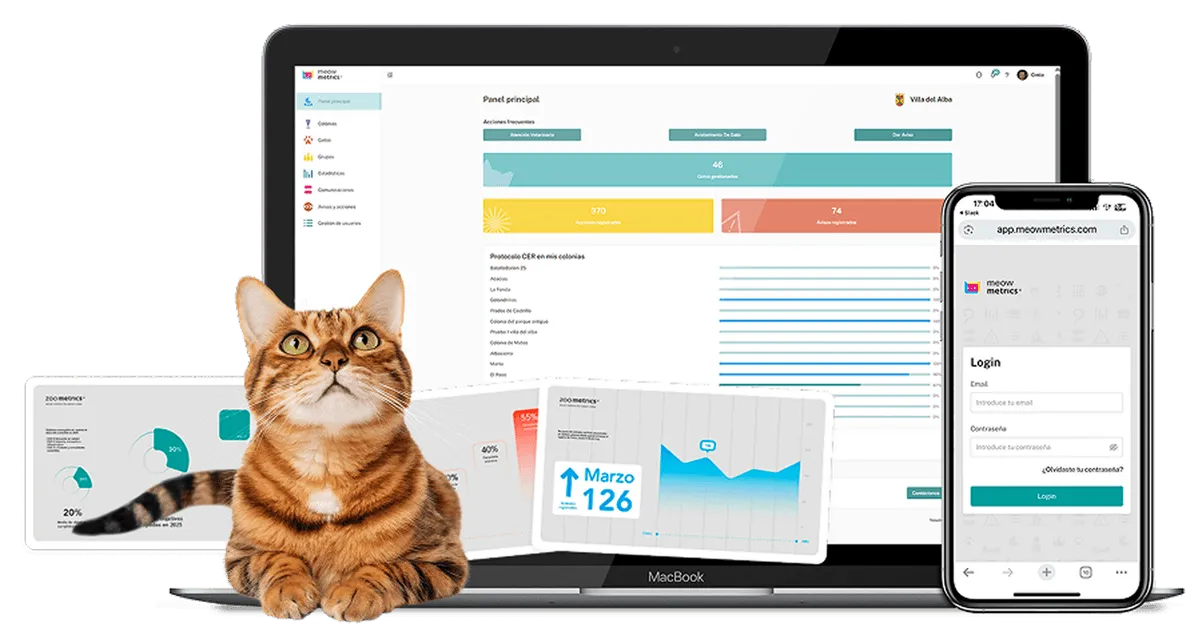
A community cat management system capable of recording activities and tracking volunteer hours helps transform invisible work into objective and measurable information.
Suddenly, municipalities can visualize:
- hours dedicated to each colony;
- time invested in captures;
- incidents handled;
- veterinary or municipal travel;
- workload distribution by area;
- and the monthly evolution of interventions.
And this data has enormous value.
Because it demonstrates something colony caregivers have been saying for years:
behind every colony there is an enormous amount of daily work.
These indicators also help professionalize community cat management without losing the human and collaborative spirit that defines animal welfare volunteering.
Hour Tracking Could Open an Important Door
There is another dimension that more and more municipalities are beginning to consider.
If volunteer hours are recorded in a structured and verifiable way, this system could also function as formal proof of volunteer dedication.
Similar to what already exists in fields such as Civil Protection or environmental volunteer programs.
This is particularly important because it could allow many colony caregivers to be formally recognized as volunteers under national volunteer legislation.
Not simply as people who “help cats,” but as participants in organized public-interest activities related to:
- ethical urban wildlife management;
- public health;
- urban sustainability;
- neighborhood coexistence;
- and environmental protection.
Recognizing Volunteers Also Means Protecting Them
This approach carries very important implications.
Because once volunteer work becomes structured and officially recognized, it opens the door to basic forms of support and protection such as:
- specialized training;
- operational protocols;
- liability insurance;
- accident insurance;
- official accreditation;
- and institutional coordination and support.
This would represent a major change compared to the reality many colony caregivers currently face.
Today, much of community cat volunteering is carried out almost entirely alone — without tools, protection, or formal recognition — despite involving constant and essential work for municipal community cat management.
Recording hours and interventions will not solve every problem.
But it does help create a much stronger foundation for professionalizing and protecting this work.
Law 7/2023 Requires Increasing Coordination and Traceability
The implementation of Ley 7/2023 de bienestar animal (Spain’s Animal Welfare Act) is accelerating this need even further.
Municipalities now increasingly require:
- updated colony censuses;
- intervention traceability;
- volunteer coordination;
- TNR planning;
- monitoring indicators for budgeting and public justification;
- and technical documentation for grant applications or funding reports.
And all of this requires data.
Community cat management can no longer depend solely on scattered information or informal knowledge.
It requires collaborative tools capable of connecting volunteers, animal welfare organizations, veterinarians, and municipal technicians within the same digital infrastructure.
Measuring Hours Also Helps Give Value to Daily Work
There is also an important human dimension that often goes unnoticed.
When volunteers can visualize:
- how many hours they have dedicated;
- how many interventions they have carried out;
- how many incidents they have resolved;
their perception of their own work changes.
The effort stops feeling “small” or informal.
It starts becoming recognized as organized, consistent, and valuable work.
And this also improves the relationship between municipalities and volunteers because discussions can be based on real and objective data rather than perception alone.
Ethical Community Cat Management Needs Less Invisibility
In every city and every country, millions of people sustain ethical community cat management every single day.
The problem is that most of this work is never reflected anywhere.
And as long as it remains invisible, it will continue to be more difficult to:
- justify resources;
- request institutional support;
- improve coordination;
- protect volunteers;
- and professionalize management systems.
That is why the problem is often not a lack of volunteers.
The real problem is that nobody is measuring everything they are already doing.
Alley Cat Allies – Community Cat and TNR Resources
Community Cats Central – Best Practices for Colony Caretakers