When we talk about biodiversity, we often imagine something distant: vast forests, protected wetlands or remote natural reserves — places where it seems that “the important things” happen.
But biodiversity is much closer than we think.
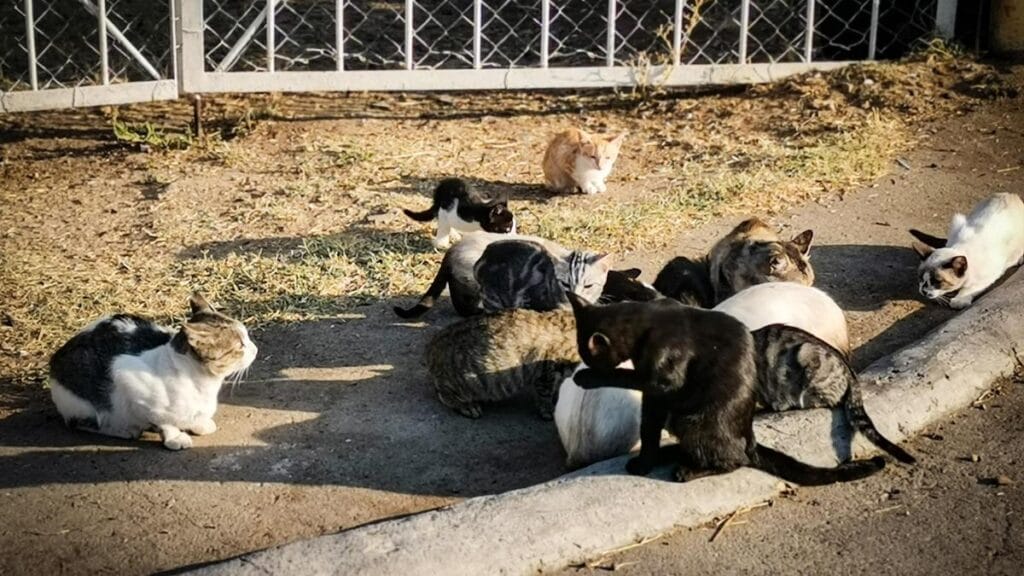
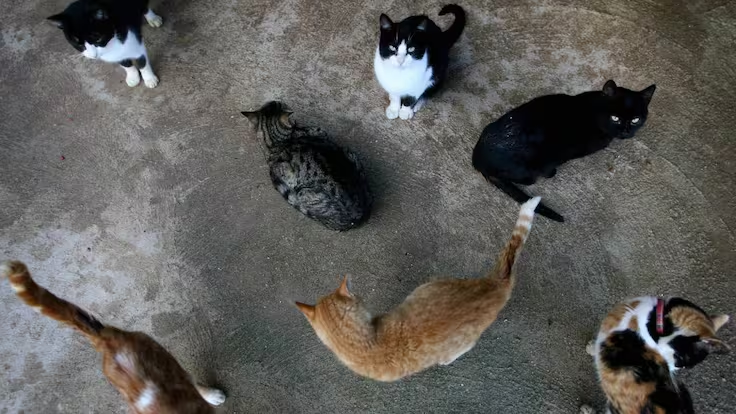
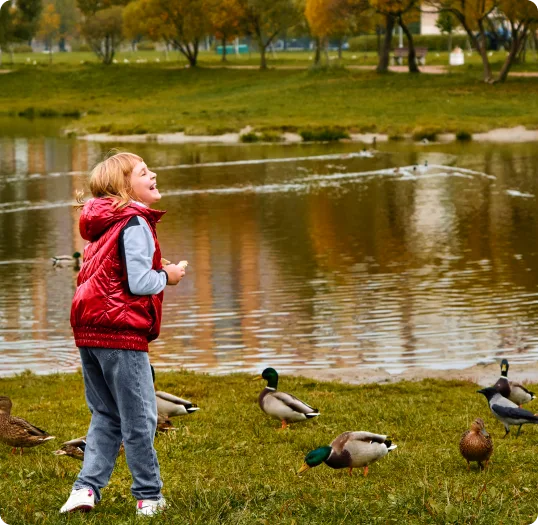
It exists in our cities, in the parks where we walk, in the birds nesting on our buildings, in the insects pollinating the trees that provide shade during summer, and even in the community cats that have become part of the urban ecosystem.
And this is where things become especially interesting:
urban biodiversity also has value.
Not only ecological value, but also social and increasingly economic value through emerging mechanisms such as biodiversity credits.
Although still relatively new, biodiversity credits are expected to play a major role in the future of environmental protection by helping fund conservation, restoration and sustainable urban management initiatives.
And importantly, this transformation is not limited to rural landscapes or protected natural areas.
Cities themselves are beginning to be recognized as important ecosystems that deserve monitoring, protection and smarter environmental management.
What Are Biodiversity Credits?
Biodiversity credits are a mechanism designed to measure, certify, and finance real improvements in ecosystems.
If a city, company, or public administration succeeds in increasing the biodiversity of an area — through more species, better habitats, ecosystem restoration, or improved green connectivity — that positive impact can be recorded and transformed into a credit.
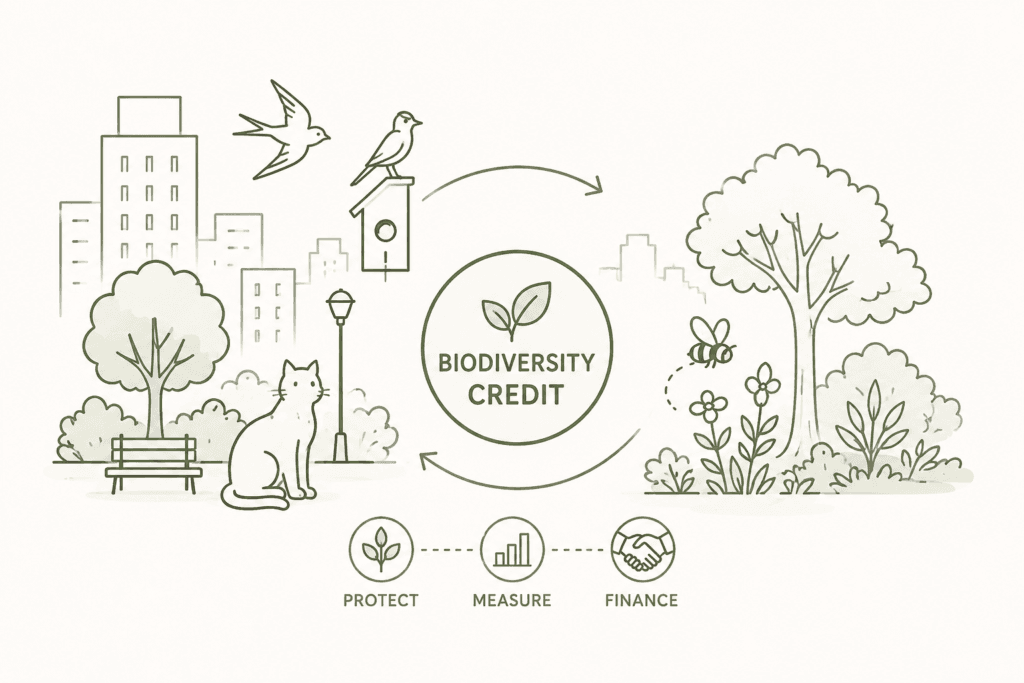
These credits can be used to:
- offset environmental impacts,
- comply with new European regulations,
- attract green financing,
- or demonstrate climate commitment to citizens and regulatory institutions.
The key is always the same: there is no credit without verifiable data.
And that is where the revolution begins.
Why are cities entering this market?
Because Europe is demanding it.
The Biodiversity Strategy 2030, the Green Deal, the new green taxonomy, and environmental compliance frameworks all point in the same direction:
cities that restore nature, regenerate degraded spaces, and measure their impact objectively.
Cities not only can do this:
they must demonstrate that they protect their biodiversity
And this is where every small action becomes meaningful:
every tree planted, every restored urban wetland, every stabilized cat colony, every improvement in urban wildlife.
Everything counts but only if it is measured.
From observing to measuring. From measuring to valuing. From valuing to acting.
Until now, urban biodiversity was something we “knew existed,” but it was not properly quantified.
How many species coexist in a neighborhood?
Where are the critical areas?
Where is a city gaining biodiversity… and where is it losing it?
Without data, there is no public policy.
And without public policy, there is no real impact.
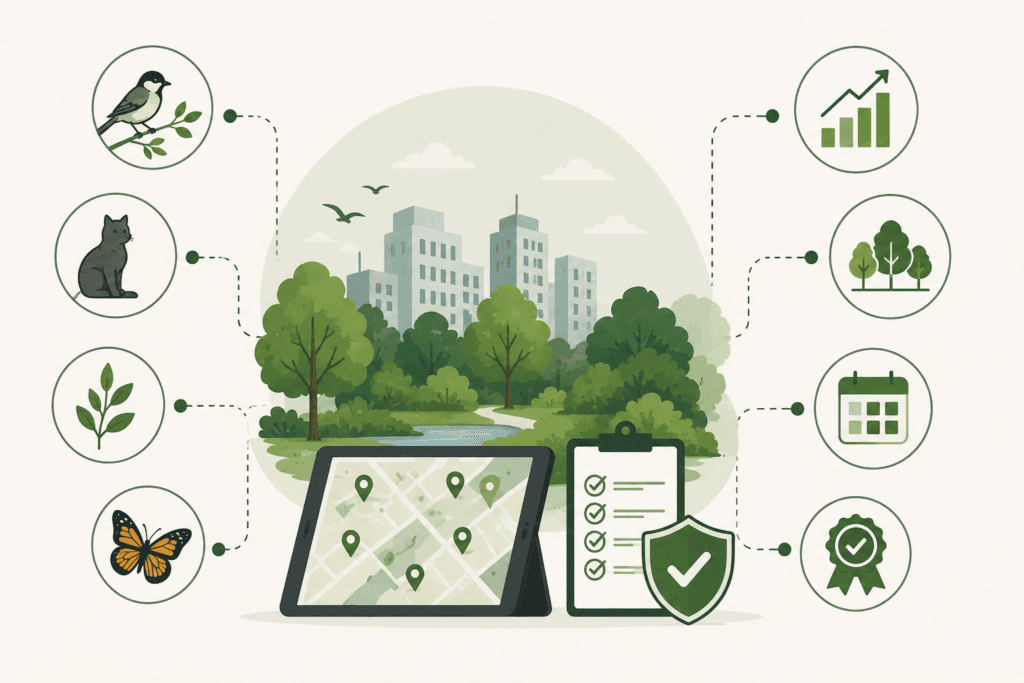
Zoometrics was created precisely for that reason: to understand and protect urban biodiversity through evidence.
Because if we can measure it, we can improve it.
And if we can improve it, we can value it.
How Zoometrics Lays the Foundations for Future Biodiversity Credits
Zoometrics modules generate auditable, anonymized data aligned with European standards.
This allows municipalities to:
- quantify the real state of their urban biodiversity,
- monitor trends with precision,
- demonstrate improvements with evidence,
- and build robust environmental impact indicators.
Clear records, traceability, species mapping, temporal evolution, verifiable evidence…
Exactly the requirements that the European biodiversity credit market will demand once it becomes fully operational.
Zoometrics does not sell credits.
But it does create the digital infrastructure needed so that, when this market matures, municipalities are ready:
with data, with evidence, and with a solid historical record.
“The cities of the future will not only be smart. They will be able to understand, measure, and value the life that already exists around them.”
Because those who do not measure today… will not be able to create value tomorrow.
Urban biodiversity is no longer just a “beautiful ideal”: it is an essential part of how future cities will become sustainable, resilient, and healthy.
And if there is one thing I have learned over the years, it is that transformation always begins the same way: by looking at what we already have, measuring it properly, and daring to take better care of it.
And who knows… perhaps, very soon, this data will also become an opportunity for our municipalities.