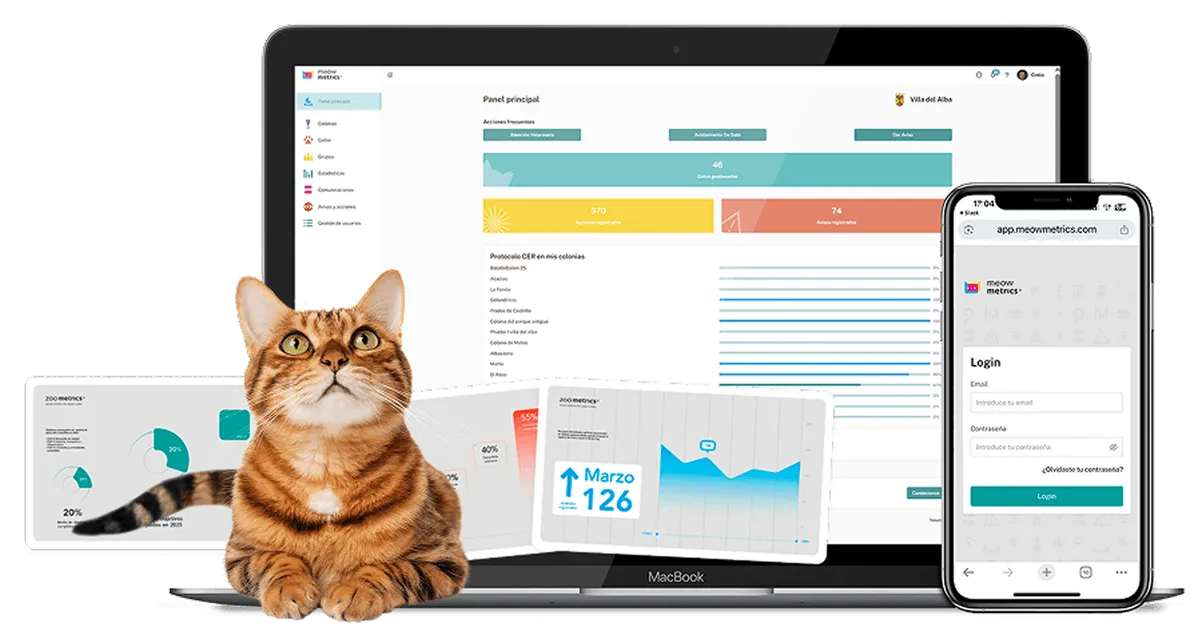
Meow Metrics now manages more than 2,000 cat colonies. Here are the figures and what they mean in the daily work of a managing organisation or a council department.
The numbers, in management terms
- More than 2,000 colonies with location, caregivers and an up-to-date status.
- More than 17,000 animals with a record and follow-up of their TNR protocol.
- More than 23,500 actions recorded: feeding, trapping, sterilisations, health checks.
- More than 11,500 alerts published and handled, from the public or from the team itself.
- 1,300 active users among managers, volunteers and technical staff.
- More than 25,000 hours of estimated work, volunteer time that used to go uncounted.
What changes when everything is recorded
With this data, whoever manages colonies can:
- Know how many colonies and animals there are, and what percentage has completed the TNR protocol.
- Back up a grant application or an annual report with real figures.
- Handle alerts with traceability: who, when and with what result.
- Recognise volunteers’ effort, because every hour is recorded.
Who we built it with
These figures come from real use, and from those who trusted us from the start:
- Aloha Animal Alliance
- Yebes Town Council, which went from zero records to managing its TNR programme with data.
- CES FeliMarcha, in Marchamalo, which moved five years of Excel records onto the platform.
- Fundación Salvando Peludos, which works in several municipalities in Madrid and Castilla-La Mancha.
You can see the detailed results in the success stories.
What comes next
This database also opens the door to something bigger: comparing practices across territories and supporting cooperation between town councils and managing organisations. We talk about it on the Zoometrics website.
Do you manage colonies? .