To set up a municipal TNR program in Spain from scratch, start by gathering the caregivers who already look after community cat colonies; then commit to a term-long plan that begins with the census, adopt your own protocol and build support inside and outside the council. That is how I did it as Public Health councilor in Collado Villalba (2019–2023).
“I don’t know where to start.” A councilor who had just taken over the management of community cat colonies in their town said that to me this week. Word for word.
I understood them perfectly. I was in that same spot in 2019, when I took over the Public Health portfolio (Concejalía de Sanidad) of Collado Villalba, a town near Madrid, in Spain. And I did it before Spain’s Law 7/2023 (Ley 7/2023) existed: no national framework, no models to copy and no existing structure.
This article opens the series Municipal TNR from scratch. In it I will explain, step by step, how a local government in Spain builds a TNR (Trap-Neuter-Return) program. Not from theory, but from what worked, what it cost and what I would do differently today.
Before becoming a councilor, I was a colony caregiver
My motivation was, above all, personal. Between 2018 and 2019 I shared the care of a cat colony with other volunteers. Tuesdays were mine.
I learned first-hand what it involves: neutering the cats, negotiating with the neighbors for a corner for shelter and a feeding point, and paying for everything out of our own pockets. We were a committed group and followed fairly strict protocols. But we did it completely on our own, with no institutional backing.
When I got into politics, that sensitivity led to my being offered the portfolio for domestic and companion animals. I made it a priority of the term for a simple reason: it did not seem fair to me that looking after animals on public streets should fall, informally, on private volunteers with no supervision or support from the administration.
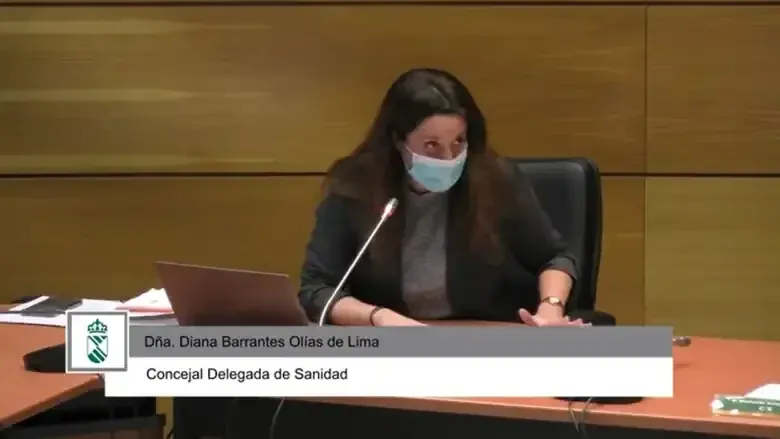
As councilor for Public Health, at a plenary session of Collado Villalba Town Council. Source: official YouTube channel of Collado Villalba Town Council.
What I found on day one: nothing
And that is not a figure of speech. The Public Health department did not know where the colonies were, how many cats lived in the town or who looked after them.
The information existed, but it was out on the street: scattered among caregivers, a local association and a few trappers. With no link to the council at all.
I suspect this is the starting point for most towns that are beginning today. That is why the first step is neither technical nor legal. It is human.
Before any step: patience and trust
This does not appear in any protocol, and for me it is the most important thing in this article.
First, patience with the process. A TNR program does not solve in months a problem that has festered for decades. What took me four years in Collado Villalba, Ángel Álamo, councilor for Public Health in Yebes (Guadalajara), achieved in less than one. He inherited a program without a single record and today he has 17 colonies with a TNR protocol, 232 cats managed and more than 2,000 hours of recorded work, which he can account for to residents and to the provincial council (Diputación) (data taken on 26 October 2026). We tell the story in detail in our success stories. But even so, it is still a process, not a formality.
Second, patience with the caregivers. And I want to say this with complete transparency, without any intention of criticizing. The vast majority have spent years, sometimes decades, looking after street cats with little or no support. They have put up with insults from neighbors. Many have felt hounded by the administration itself and have been forced to work at night and in hiding, as if they were doing something wrong.
That leaves a mark. In some, it shows as a very combative character. In others, as accumulated frustration, which is often taken out on the council. It is understandable: for a long time, the council was part of the problem.
That is why the first meetings can be tense, even hostile. They do not trust you, and they have reasons not to. The trust they lost in institutions is not regained with a speech. It is regained with small actions, piled up, that show that this time you are serious.
The formula that worked for me had two parts: clear rules of the game and a great deal of patience. Defined rights and duties for all parties, yes. But without forgetting two things: that they are volunteers, not employees, and that they carry years of being left unprotected.
Why caregivers are the first ally
A TNR program is a public policy with many players: council departments, veterinary clinics, the company awarded the service contract. You do not always manage to get everyone rowing in the same direction. But if you have to choose whom to start with, my answer is clear: with the volunteers, from day one.
They are the town’s eyes on the street. And they do daily work that would be impossible to pay a company for. No contracted service would do it with the same dedication: they put in their money, their time, their energy and their emotions. I sincerely believe that a municipal TNR program is unworkable without them, and that they must be valued as they deserve.
With that framework clear, these are the first steps I took.
Step 1. Bring together the people who are already out on the street
The first thing I did was create a communication channel. To be honest, it was a WhatsApp group with the five or six caregivers I knew.
I quickly understood something key: in every town there are influential people who know one another. I asked the local association and several trappers to invite the caregivers they trusted. Word of mouth did the rest, and the group kept growing.
Once there was a critical mass, I called a first in-person meeting. It had two goals: to meet in person those I did not yet know and to present the plan. That meeting set the tone for everything else: the council was coming to back work that already existed, not to replace it.
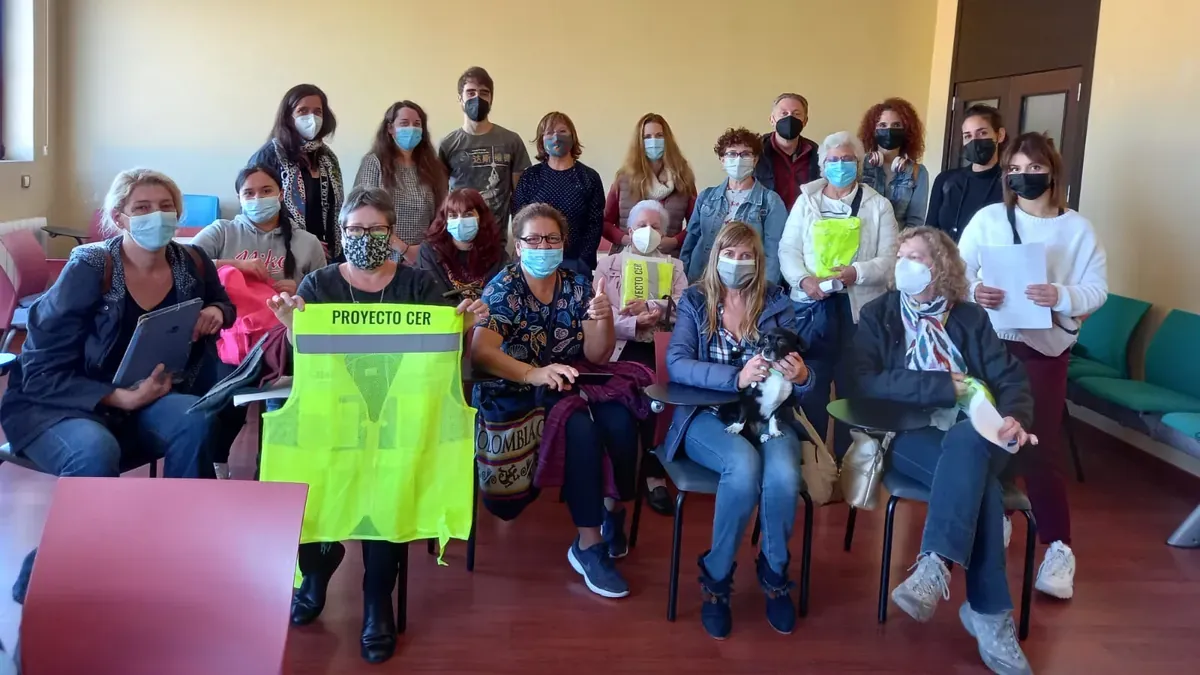
That first meeting took place in 2020, in the middle of the pandemic. At it we handed out the first identification vests reading “Proyecto CER”. It was a small gesture, but it was the first that said, without words, that the council was on their side.
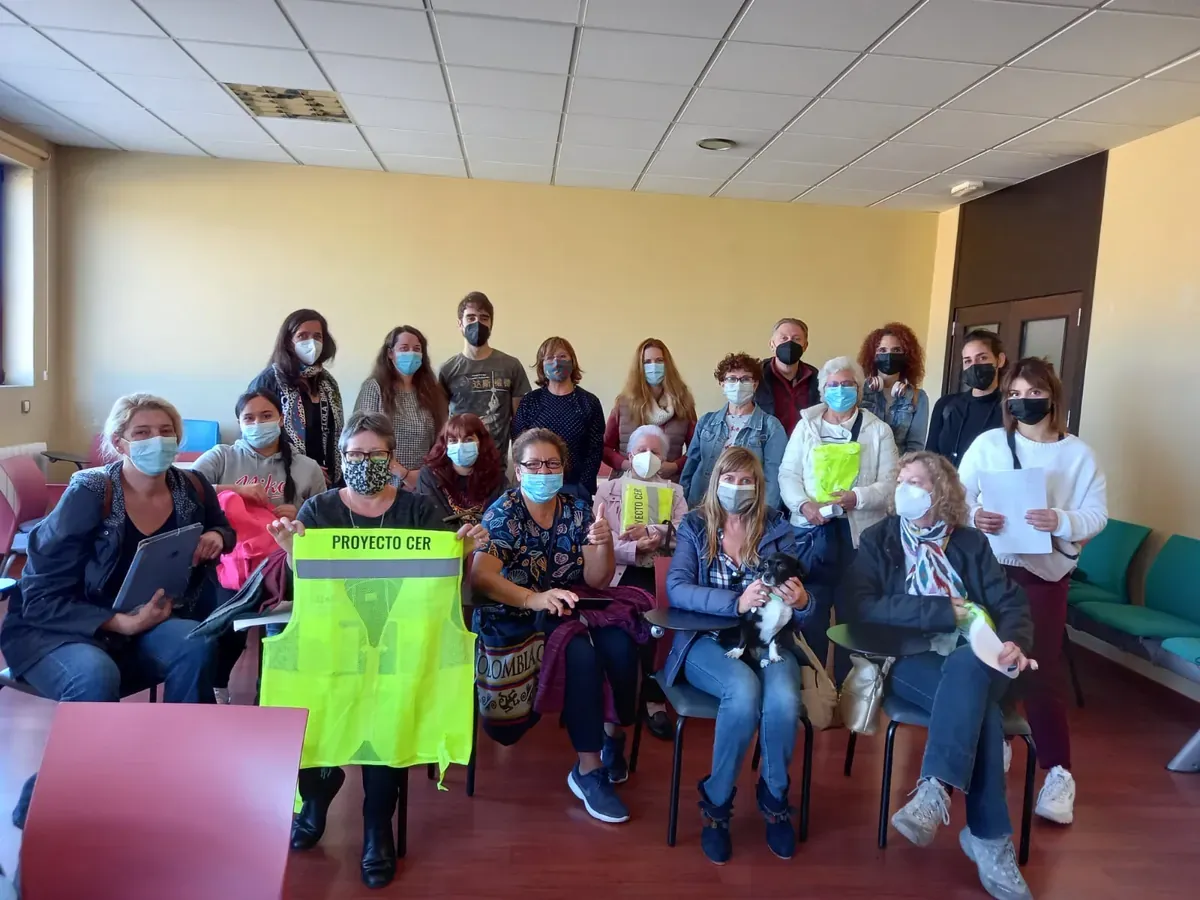
First meeting with the community cat caregivers of Collado Villalba (2020), with the handing out of the identification vests reading “Proyecto CER”.
From that group I identified the caregivers who inspired the most confidence in me: experience, commitment and common sense. I appointed them coordinators and gave each one a role according to what she did best: one led the trapping, another helped me build the first census templates. They were my mainstays and, without them, setting up a TNR program from scratch would have been unmanageable. It is the same logic that Yebes applies today with its zone coordinators.
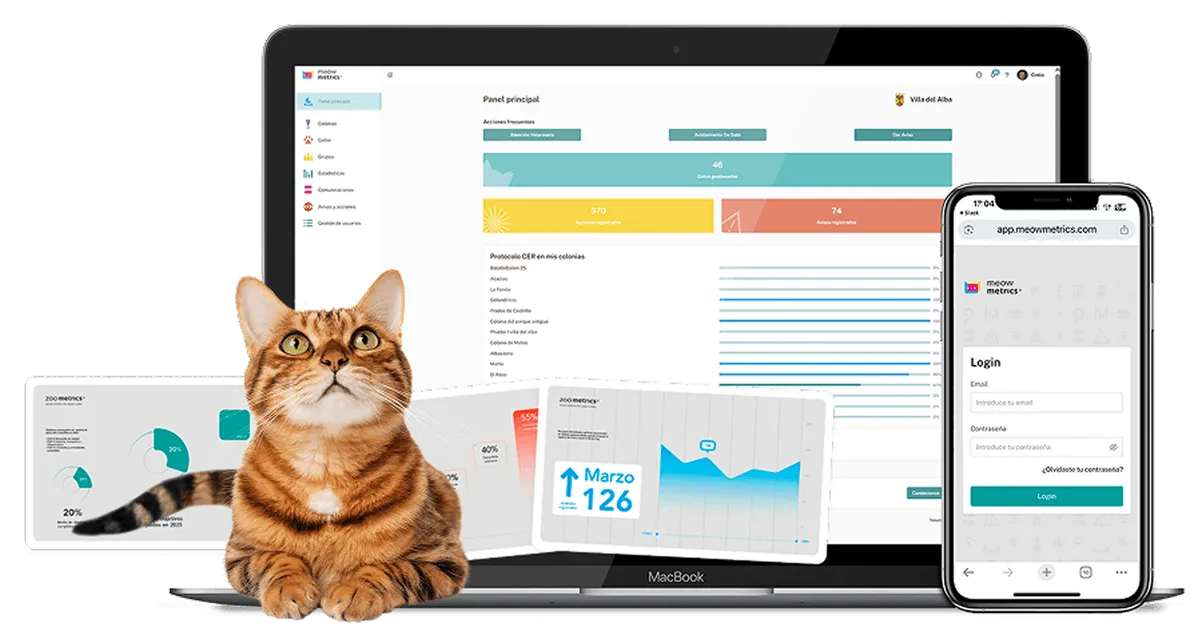
Today I would not repeat the WhatsApp group as it was. It is useful to get started, but it mixes personal data, colony locations and informal conversations in a channel the council does not control. It is one of the reasons why, in the local government account of Meow Metrics, communication and data live in the same place.
If you want to go deeper into this human dimension, we develop it in Managing community cat colonies also means managing people.
Step 2. A plan for the full term of office
At that first meeting I explained a concrete commitment: during the 2019–2023 term, the council was going to set up a municipal TNR program. And I set out its first actions:
- A census to get a rough idea of how many colonies and how many cats there were, and where.
- A map of people: how many volunteers and caregivers looked after the colonies.
- Institutional backing for them: training, municipal accreditation with an ID card and a resolution from the Public Health department authorizing them. I will cover this in detail in another article in the series.
Setting a time horizon is not a detail. A TNR program does not deliver visible results in months, and the people out on the street need to know that the commitment does not end with the first photo. The census, by the way, deserves its own article: it will be the next one in this series.
Step 3. Your own protocol, not a copied one
I drafted a municipal TNR protocol adapted to Collado Villalba, because every town is different. I took into account its size, the fact that there was only one association and the rest were individual volunteers, and the approximate number of cats.
The protocol set out the rights, duties and responsibilities of both parties: the council and the volunteers. It was formally approved.
I also updated the ordinance on responsible ownership of companion animals, which had gone almost twenty years untouched. Among many other changes, I added wording that provided a legal basis for the TNR protocol. Without that regulatory basis, the program depends on the goodwill of whoever governs at any given time.
Today this step has explicit legal backing. Article 39(1) of Spain’s Ley 7/2023, de 28 de marzo, de protección de los derechos y el bienestar de los animales (Spain’s animal welfare law; official text in Spanish) reads: «En ausencia de otra previsión en la legislación autonómica, y respetando el ámbito competencial establecido por la legislación vigente, corresponde a las entidades locales la gestión de los gatos comunitarios, a cuyos efectos deberán desarrollar Programas de Gestión de Colonias Felinas». We will devote a full article to it. In the meantime, you can read what changes with Law 7/2023 and how to legalize a cat colony.
Step 4. Win support inside and outside the council
A TNR program is a cross-cutting policy. As a councilor I could take the initiative, but without support it would not have got off the ground.
| Area | Who | Why it is essential |
|---|---|---|
| Internal | Mayor’s office and governing team | Without their political backing, a single department’s initiative does not prosper |
| Internal | Public Health department technician | Gives legal shape to the protocol and the ordinance |
| Internal | Administrative staff of the department | Takes calls and emails, processes forms |
| Internal | Environment | Many colonies are in parks and gardens |
| Internal | Urban planning | Location conflicts with building works |
| Internal | Local Police | Mediation in neighbor disputes |
| Internal | General Services (maintenance crew) | Installs feeding points and removes discarded items |
| External | Caregivers and associations | They are on the street every day; without them there is no program |
| External | Veterinary clinics | Neutering, identification and health care |
| External | Animal collection company | In large towns, coordination of the service; in my case, after a tender, it included TNR management |
My advice: identify these people in the first few weeks, before you need them. For the political side, it may help to read how to win a council over to a TNR program without confrontation.
If you can only do three things in the first month
- Bring together those who already look after colonies. One channel and one in-person meeting. Listen before you propose.
- Secure the backing of the mayor’s office and of the technical staff. Without them, nothing else holds up.
- Commit to a public plan with deadlines. Starting with the census.
You do not need to have everything worked out to begin. You need to begin in an orderly way.
In the coming weeks we will talk about the census, the municipal program, volunteer training and how to fund it, including the DGDA grant.
And you? If you are just starting, what is your biggest question right now? If you have already done it, what do you wish you had known on day one?
If you are just starting, you can download our guide to launching a municipal TNR program.
if you want to see how we organize these first steps with the councils we work with.
Frequently asked questions
What is the first thing a council should do to set up a TNR program? Identify and bring together the people who already look after colonies in the town, and secure internal political and technical backing. Then, the census.
What does Spain’s Ley 7/2023 say about municipal cat colony management programs? Article 39(1) of Spain’s Ley 7/2023, de 28 de marzo, de protección de los derechos y el bienestar de los animales (official text in Spanish) reads: «En ausencia de otra previsión en la legislación autonómica, y respetando el ámbito competencial establecido por la legislación vigente, corresponde a las entidades locales la gestión de los gatos comunitarios, a cuyos efectos deberán desarrollar Programas de Gestión de Colonias Felinas».
Which council departments take part in a municipal TNR program? Besides Public Health or Animal Welfare, Environment, Urban Planning, Local Police and General Services usually take part.
How long does it take to set up a TNR program? The first steps are taken within weeks, but consolidating the program takes time: in Collado Villalba, without digital tools or a national framework, it took four years; in Yebes, starting from zero records and with Meow Metrics, less than one. In any case, it is best to plan it for the full term of office.
About the author
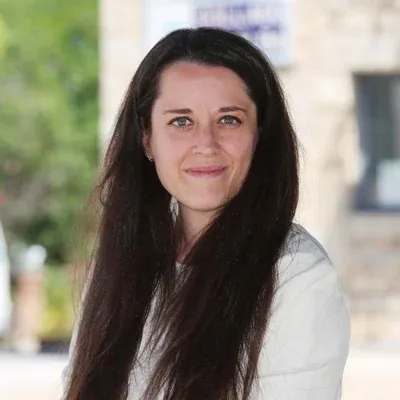
Diana Barrantes Olías de Lima is Founder and COO of Zoometrics, the company that develops Meow Metrics. She was a volunteer community cat caregiver and, between 2019 and 2023, municipal councilor for Public Health at Collado Villalba Town Council (Madrid, Spain), where she set up the municipal TNR program from scratch, approved its protocol and updated the ordinance on responsible ownership of companion animals. She has more than ten years of experience in the public sector and works with 40 Spanish municipalities on managing their urban animals (data taken on 26 October 2026).