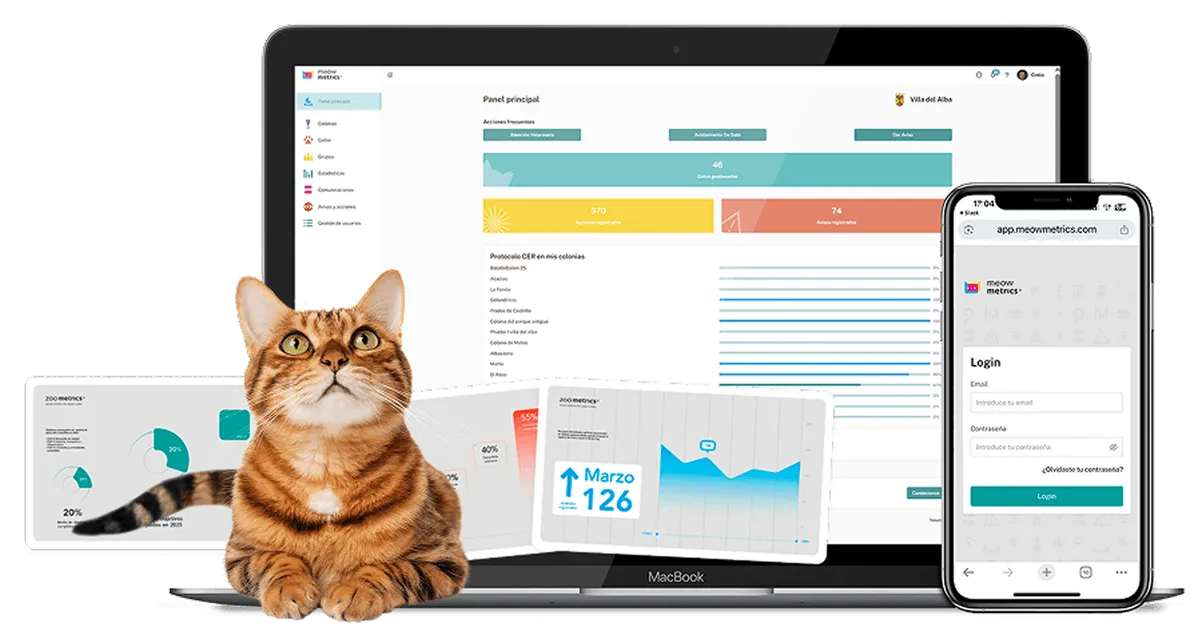
To run a cat colony census in a municipality in Spain, the town council should start with the caregivers who already look after the colonies: collect with them a few basic details on each colony and each cat (location, neutered or not, microchip), protect the location and decide from the outset how to keep the census up to date.
Out of 1,142 applications submitted by Spanish town councils to the latest national grant call for cat colony management, only 35 have been proposed for funding. That is around 3%, according to an analysis by the law firm Aboganimal (in Spanish). Its conclusion is clear: applying is no longer enough; you need a solid technical file.
And a solid file always starts in the same place: knowing how many cats there are, where they are and what condition they are in. In other words, with a census.
In the first article of this series I explained where to start a municipal TNR (Trap-Neuter-Return) program. Today it is time for the first technical step: how I ran the cat colony census in Collado Villalba (Madrid), what data I asked for, what went wrong and what I would do today.
What a cat colony census is for
The census comes first because it answers the question everything else depends on: do we have a cat population problem in the municipality and, if so, how big is it?
Without that answer, every decision is made blind. And the first thing to suffer is the budget. Budgeting a TNR program for 15 cats is not the same as budgeting for 50, 500 or 2,500. The number of sterilizations, microchips, veterinary treatments, food and coordination hours all change.
In short, a census serves three purposes:
- Sizing the problem: how many cats there are, how many are already sterilized and where they are concentrated.
- Budgeting on solid ground: calculating the real cost of the program instead of allocating a symbolic amount.
- Applying for funding with evidence: the application form for the Spanish state grant for local authorities (in Spanish) asks, among other things, how many colonies there are and whether that figure comes from a census or is only an estimate.
It also has legal backing. Article 39(1) of Spain’s Ley 7/2023, de 28 de marzo, de protección de los derechos y el bienestar de los animales (Spain’s Animal Welfare Act; official text in Spanish) reads: «En ausencia de otra previsión en la legislación autonómica, y respetando el ámbito competencial establecido por la legislación vigente, corresponde a las entidades locales la gestión de los gatos comunitarios» [unofficial translation: “In the absence of other provisions in regional legislation, and respecting the division of powers established by current legislation, local authorities are responsible for managing community cats”]. Among the criteria for their population control plans, it lists «Mapeo y censo de los gatos del término municipal» [unofficial translation: “Mapping and census of the cats in the municipality”] (Article 39(1)(f)(1)). The Technical Guideline on cat population management (in Spanish) issued by Spain’s Directorate-General for Animal Rights (DGDA) in August 2024 develops this further. It also acknowledges that not all the data will always be available, so the key is to get started. If you want a refresher on the legal framework, we explain it in what changes with Law 7/2023.
Who knows how many cats there are: the colony caregivers
This connects with the central idea of the first article: a municipal TNR program cannot be run without colony caregivers. And the census is the best example.
Caregivers go to the feeding point every single day, without exception. They know each cat by name. They know which female is the matriarch and which kitten belongs to whom. They know whether a cat is neutered, because they were often the ones who paid for the neutering, the vaccines or the deworming out of their own pockets.
Many have been writing all this down for years. Some keep lists of cats and expenses, and even a record of the cats that are no longer there. It is valuable information that no town council has. That is why we say that colony caregivers are the first line of alert.
So the first step in a census is to ask them. And it has an added benefit: asking them for the census is the perfect opportunity to start working as a team.
What data to collect in a cat colony census
To begin with, a census does not need dozens of fields: it needs the basics, collected well. These were the data I cared about most when I ran the census in Collado Villalba:
| Block | Data | Why it matters |
|---|---|---|
| Caregiver | Name and contact details | Knowing who looks after each colony and being able to coordinate |
| Colony | Descriptive location | Colonies rarely have an address with a street number. They are, for example, “in the empty lot at the end of the street, at the back, under the hedge” |
| Colony | Coordinates (if possible) | They place the colony on a map without ambiguity |
| Cat | Name given by the caregiver | It is how the person who sees it every day identifies it |
| Cat | Coat color or pattern | A rough way to recognize it |
| Cat | Neutered: yes or no | This is the figure that sizes the TNR program |
| Cat | Microchipped: yes or no | Shows how many still need to be identified |
| Cat | Microchip number and registered owner | Many cats are registered to an association or a caregiver; Ley 7/2023 (official text in Spanish) provides for «identificación obligatoria mediante microchip con responsabilidad municipal» [unofficial translation: “mandatory identification by microchip under municipal responsibility”] (Article 39(1)(f)(3)) |
| Cat | Approximate date of birth | The year is enough |
| Cat | Kinship (mother, matriarch) | Helps understand the dynamics of the colony |
An important warning: the location of the colonies is sensitive information. It should stay within the town council and the caregiver team and never be published openly. A colony that can be located is a colony exposed to dumping or attacks.
From a basic census to an enriched census
That basic census is perfect for getting started. But with a specialized tool such as Meow Metrics, the data can go much further. For example, each cat’s health and clinical history:
- The veterinary treatments it has received and when.
- The illnesses it has had, whether its own or infectious.
- Any accidents it has suffered and the treatment it was given.
The DGDA Technical Guideline itself recommends that each colony record should include an individual census with the sex and health status of each cat, as well as indicators such as the sterilization rate.
With enough data accumulated, it can be cross-referenced to detect patterns, identify trends and even make predictions. Some questions an enriched census can answer:
- How much does it cost on average to care for a cat in my municipality? There is a general average, but every municipality is different. The life expectancy or the illnesses of cats in a coastal town are likely to differ from those in a mountain or island municipality.
- How long does a colony cat live in my municipality? With that figure, you can plan how much will need to be invested in the TNR program until the population stabilizes and starts to decline.
Sociability: the data point that opens the door to adoption
There is another data point I consider essential in a good census: how sociable each cat is.
Feral cats will remain feral. But many colonies include cats that were abandoned. They were once family cats, learned to survive on the street and get by, but could perfectly well live in a home. Others, without ever having had an owner, have become sociable or simply have an excellent temperament.
Once again, the person who knows best is the caregiver who feeds them every day. If she vouches that a cat is suitable for adoption, that information can change its life.
With it, a town council can go beyond the census and design an active policy to rehome street cats. Just as the animal collection service puts unclaimed animals up for adoption, colony cats able to live with a family can be included in that circuit.
This should be done realistically. The DGDA Technical Guideline points out that most community cats have little socialization, so management cannot rely on adoption alone. But it considers adoption a useful complement for socialized cats and for kittens still young enough to be socialized, especially in urban areas.
And this ties in directly with the goal of TNR: controlling the cat population. Every sociable cat that finds a home is one cat fewer on the street. For that journey, from the street to adoption, we also developed Ark Metrics, which shares data with Meow Metrics.
A census also counts people
A census does not only tell you how many cats there are. It also tells you how many people contribute to the municipal TNR program.
Almost no town council knows this figure. For years, these people have acted with the best of intentions, but in isolation and without structure, and so nobody has counted them. In Collado Villalba, in addition to Public Health, I was the councilor responsible for the Civil Protection volunteers. And I saw it first-hand: while the local Civil Protection unit had around 40 volunteers, there were usually between 60 and 70 registered colony caregivers. With people joining and leaving, but always around that figure.
In other words, in my municipality there were more cat colony caregivers than Civil Protection volunteers.
Knowing how many there are helps recognize what they contribute to the municipality. It also helps size the program: how much training is needed and how to organize recognition for local volunteers. And not only how many there are, but how much they contribute: in Yebes (Guadalajara), the platform has logged more than 2,000 hours of work recorded in its program (data taken on 26 October 2026) (success stories). We explain this in how tracking volunteer hours improves community cat management.
It also raises an interesting question. If a municipality has such a large group of people committed to animal welfare, why not think of them as a potential environmental volunteer corps? It is a decision for each town council. But it can only be considered if there is a good census first.
How I did it in Collado Villalba
I prepared an Excel template with those fields and circulated it among all the caregivers we had identified, asking them to fill it in with their colonies’ data.
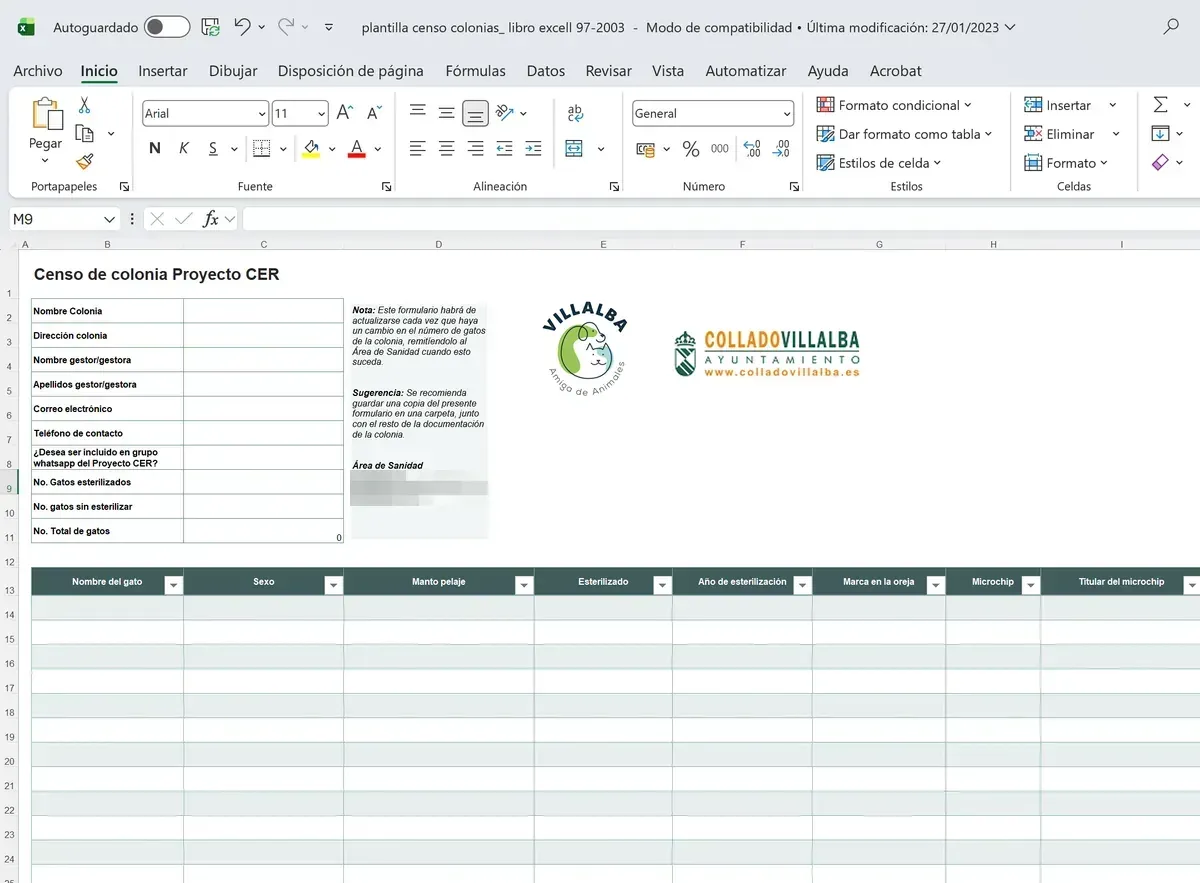
The Excel template we used in Collado Villalba for the cat colony census (2022). Own work.
I soon realized that sending it out was not enough. Many caregivers are not comfortable with Excel. So, with the help of the coordinators (the most trusted caregivers, who had agreed to take on more responsibility), we went through every caregiver in the municipality one by one. In many cases, we filled in the template ourselves while they told us the details.
The first round produced figures nobody at the town council knew:
| Data | First round of the census |
|---|---|
| Colonies | Over 50 |
| Caregivers | Over 70 |
| Cats | Over 500 |
From then on, we tried to update it once a year. Each update took weeks and often was never fully completed.
The four difficulties I encountered
1. Finding the caregivers. There is no register of who looks after which colony. You reach them through other caregivers, associations and trappers, as I explained in the first article.
2. Distrust. This is the most important one. Some caregivers fear that, if they reveal where their colony is and how many cats it has, the town council will do something bad to them. After years of feeling persecuted, it is an understandable fear.
How do you build that trust? The bad news is that it does not happen overnight, especially if it is the first time the town council has taken on a policy of this kind. The good news is that it is perfectly possible when you show, through actions, that the council wants to take on its responsibility and work as a team with them. It is neither easy nor immediate, but it pays off in the long run.
3. Time. Interviewing more than 70 people one by one, filling in templates for them and repeating it every year takes a huge number of hours. And meanwhile, the colony changes: cats are born, others disappear, others are sterilized.
4. Poorly structured data. Neither I as councilor nor the area’s technical and administrative staff were experts in Excel or databases. Each caregiver filled it in her own way, and the data were not always well structured or clean.
From a snapshot to a live census
That was my main lesson: a census in Excel is a snapshot. The day you finish it, it is already starting to go out of date. And updating it every year, caregiver by caregiver, takes weeks.
What a town council needs is a live census. With a tool like Meow Metrics, the town council can invite the caregivers, and each of them records any incident or change in her colony from her phone, as it happens and even with no signal. This has two effects:
- It saves many hours of administrative work. Nobody has to chase spreadsheets one by one.
- The census is always up to date, in real time. There is no need to wait for the annual review to know how many cats there are, how many are sterilized and where.
And because everyone uses the same tool, the data arrive structured and comparable from day one. We review what a good tool should offer in community cat management app: 7 keys to an effective municipal TNR program.
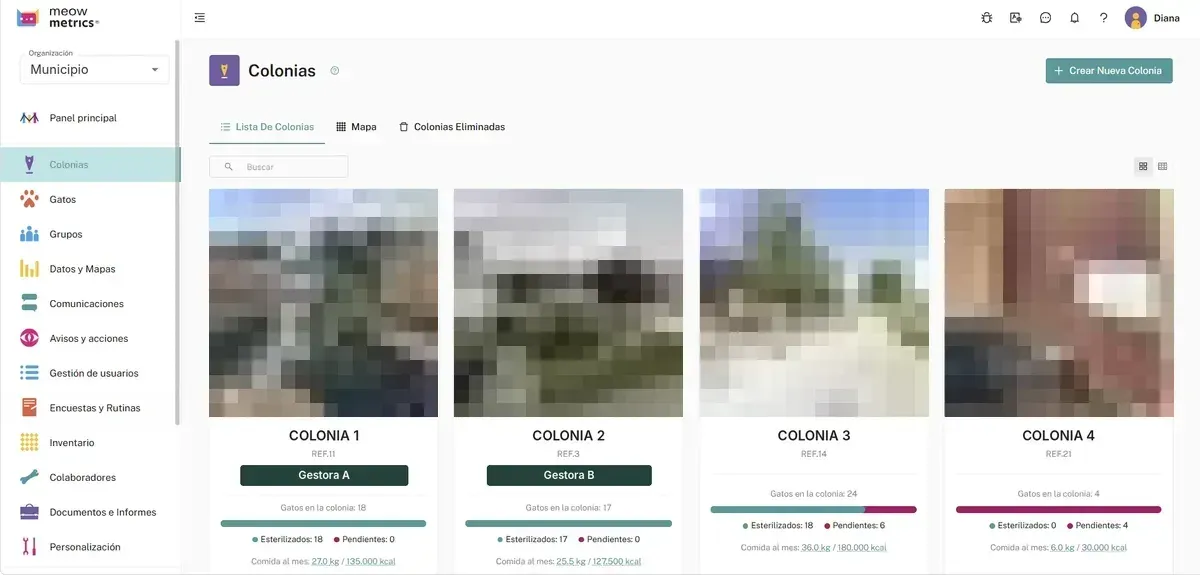
This is what a live census looks like in Meow Metrics: each colony shows its caregiver, how many cats it has, how many are sterilized and how much food it needs per month. Names anonymized.
Excel census vs census in a specialized tool
| Excel census | Census in a specialized tool | |
|---|---|---|
| Device | Needs a computer, and not all caregivers have one | A mobile phone is enough, and almost everyone has one |
| Ease of use | Spreadsheets intimidate many people | A simple, intuitive app designed for its users |
| Updates | Once a year, caregiver by caregiver, over several weeks | Continuous: each caregiver records changes as they happen |
| Data quality | Each person fills it in their own way | Structured data, the same across the whole municipality |
| Cats that eat in several colonies | Counted several times | Each cat has its profile and photo, so you can see it is the same one |
| New cats and losses | Known, with luck, at the next review | Recorded as alerts when they happen |
The case of cats that eat in several colonies deserves an explanation. Some very clever cats know several feeding points: they have breakfast at one, lunch at another and dinner at a third. Each point is looked after by a different caregiver, at her own times and with her own routine. In an Excel sheet, each of them may well count that cat as hers, and the census ends up with three cats where there is only one.
In an app where each cat has its own profile and photo, you can see that it is the same animal and that it is present in three colonies. This avoids distorting the statistics and also reveals interesting information about the cats’ habits.
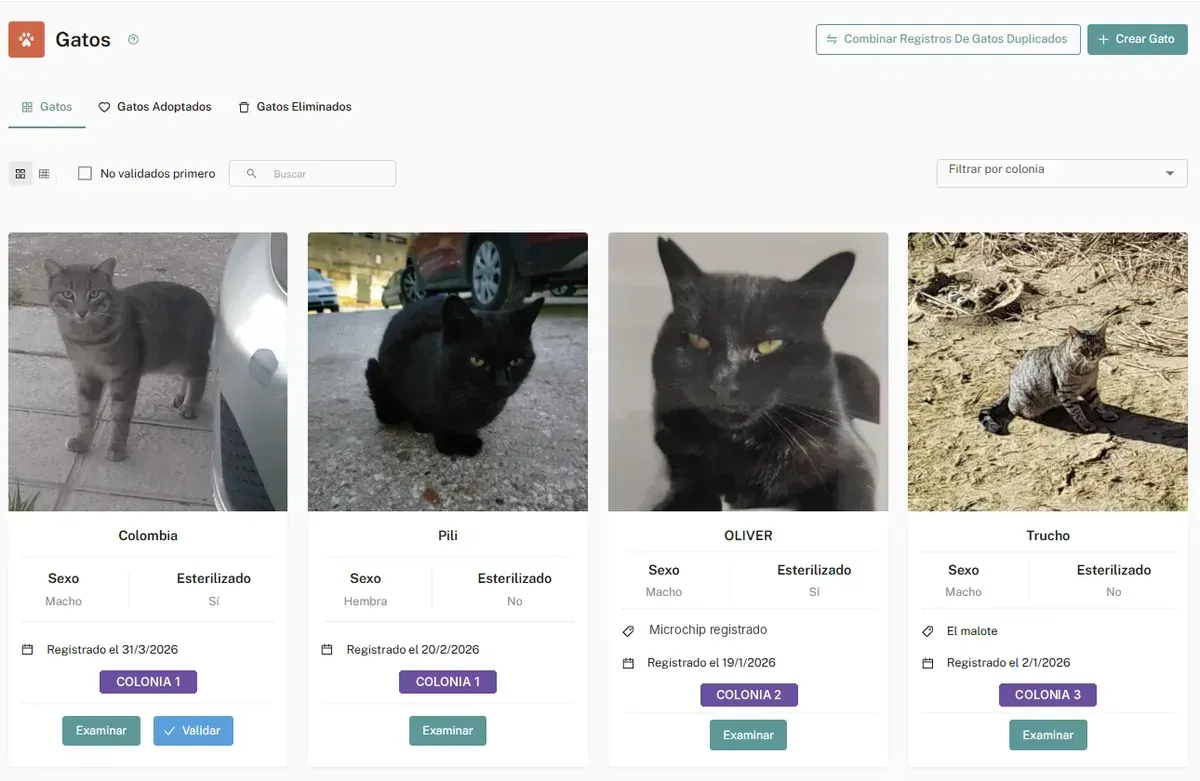
Each cat has its own profile with photo, sex and sterilization status. The “merge duplicate cat records” option lets you unify a cat that eats in several colonies. Colony data and microchip hidden.
The same applies to changes in the population. A good census is fed by alerts that keep it up to date:
- Losses, for example a cat found run over.
- New arrivals: a new cat in the colony, and whether it is sociable or not, which opens the door to adoption.
- Missing cats: cats nobody has heard of since.
- Roaming pet cats: cats with owners who let them out, but which are not feral. They should be identified so they are not confused with the colony cats.
A real example of moving from a spreadsheet to a live census: CES Felimarcha, in Marchamalo (Guadalajara), migrated five years of Excel records to Meow Metrics. With its history in order, it can now see how the colony has evolved: on 12 October 2024 it had 319 cats, 185 of which had already completed the TNR protocol; shortly afterwards the total peaked, and it has been falling ever since. That is the difference between looking after a population and reducing it in a controlled way (success stories).
What the Spanish state grant asks about the census
The application form for the state grant for local authorities (Annex I, in Spanish) asks, among other things:
- The number of colonies covered by the project, and whether the figure is estimated or based on a census.
- Whether the colonies are geographically located.
- Whether animal protection associations or organizations take part.
- Whether caregivers receive training and whether they have an identification document.
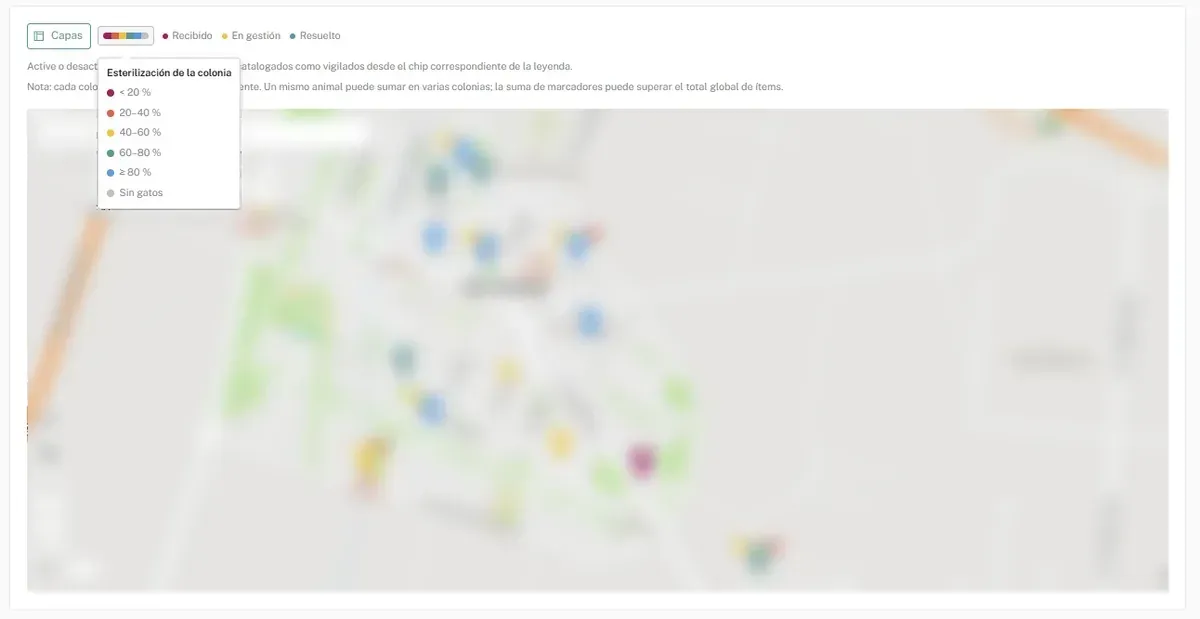
Colonies located on a map and colored by sterilization rate, in Meow Metrics. Street map blurred to protect the colonies’ locations.
With a good census, the first two questions answer themselves. And the other two are precisely the subject of the next articles in this series. If you are going to apply, download our free guide to getting the cat colony grant (PDF): what is assessed, what documents to have ready and which mistakes cost points. Our article on how to apply for the DGDA grant may also help.
Why the census matters beyond your municipality
Imagine an aggregated census of every municipality and every region. In other words, of the whole country.
Today we do not know precisely how many cats live in colonies in Spain, nor how much it costs, on average, to manage each one. The best available estimate, a study by the University of Las Palmas de Gran Canaria published in 2025, puts the figure at around 1.81 million community cats in some 125,000 colonies. But it is based on data from 1,128 municipalities, 13.9% of the total. Its authors point out that there was no national census before 2024 and that the figures reported by town councils may be biased in both directions. They also warn that, at the current sterilization rate (around 20%), the population could exceed 5 million cats by 2050.
That lack of data has consequences. Spain’s Directorate-General for Animal Rights (DGDA) has existed since 2020 (Royal Decree 452/2020, official text in Spanish) and has always worked with limited budgets. On top of that, the last approved General State Budget is that of 2023, extended for the third consecutive year in 2026 (in Spanish).
We all know that town councils, especially the smallest ones, need help to manage their cat colonies. But without a solid figure for how many cats need to be sterilized, any budget request is a guess. With data, the DGDA would have a much firmer basis for requesting the resources needed to meet a growing number of applications. Applications which, as we have seen, currently reach only a small share of municipalities.
That basis can only be built from the ground up: if every town council has a census close to reality and shares it with its provincial council, its regional government and, ideally, the DGDA, we will finally know the real scale of the challenge.
But let us come back to what depends on you. For a town council, knowing how many cats it has is the first figure it needs to size its problem and respond to it, both in budget and in organization.
Start your census this week
- Prepare a simple template with the fields in the table. Few fields, filled in well, are better. If you would rather not start from scratch, we have prepared a free Excel template for the cat colony census with similar fields.
- Start with the coordinators or the most trusted caregivers: they will open the door to the rest.
- Do not expect everyone to use Excel. Plan interviews and time to fill in the data with them.
- Explain what the census is for and what will not be done with it. Trust starts there.
- Decide from the outset how you will keep it up to date. A census that is not updated stops being useful within months.
If you want a starting point, you can download the Excel template (it downloads after a short form) and, once you have your census, try our cat colony calculator: it gives you a projection of the population and of the sterilizations needed, not a prediction, and assumes that caregivers keep caring for the colonies.
If you want to know where your municipality stands with regard to the law, download our Law 7/2023 compliance checklist. You will find more guides and official documents on our TNR resources page.
What about your municipality? Do you know how many cats there are and how many are sterilized? If you have already run a census, what was the hardest part?
In the next article in the series, I will talk about the municipal cat colony management program: what it should include and how to get it approved.
if you would like to see how a live census works with your municipality’s colonies and caregivers.
“Municipal TNR from scratch” series: 1. Where to start · 2. The census (this article) · 3. The municipal cat colony management program (coming soon).
Frequently asked questions
What is a cat colony census?
It is the register of a municipality’s community cat colonies: where they are, who looks after them and which cats belong to them, with data such as whether they are sterilized and identified.
Who should carry out a cat colony census?
The town council leads it. Article 39(1) of Spain’s Ley 7/2023 (official text in Spanish) states that, in the absence of other regional provisions, «corresponde a las entidades locales la gestión de los gatos comunitarios» [unofficial translation: “local authorities are responsible for managing community cats”], and it lists «mapeo y censo de los gatos del término municipal» [unofficial translation: “mapping and census of the cats in the municipality”] (Article 39(1)(f)(1)). But the information is held by the caregivers who look after the colonies every day, so it is done with them.
What data should a cat colony census include?
At a minimum: the caregiver and her contact details, the location of the colony and, for each cat, its name, color, sex, whether it is neutered, whether it has a microchip and who it is registered to, and an approximate date of birth.
How often should a cat colony census be updated?
With a spreadsheet, at least once a year, which usually takes weeks. With a specialized tool, the census is updated continuously: each caregiver records changes in her colony as they happen and the town council sees them in real time.
What health data can a cat colony census include?
An enriched census can record each cat’s veterinary treatments and their dates, any illnesses it has had, whether its own or infectious, and any accidents with the treatment given. With that data, you can estimate the average cost of caring for a cat and its life expectancy in each municipality.
How do you avoid counting the same cat twice in a cat colony census?
Some cats eat at several feeding points looked after by different caregivers, and each may count the cat as her own. To avoid this, each cat needs a single profile with its photo, so that it can be identified as the same animal even if it appears in several colonies.
Why include cats’ sociability in a cat colony census?
Because it identifies colony cats that could live with a family, such as abandoned cats. With the assessment of the caregiver who looks after them, the town council can include them in an adoption program, which reduces the street population and supports the goal of TNR.
Is a census needed to apply for the Spanish state grant for cat colonies?
The application form asks how many colonies there are, whether the figure comes from a census or is an estimate, and whether the colonies are geographically located. An up-to-date census lets you answer with data and strengthens the application. Our free grant guide explains what else is assessed.
About the author
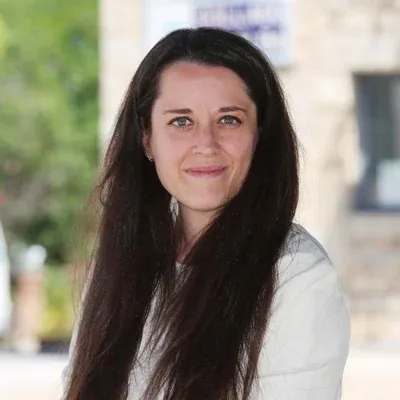
Diana Barrantes Olías de Lima is Founder and COO of Zoometrics, the company behind Meow Metrics. She was a volunteer cat colony caregiver and, between 2019 and 2023, councilor for Public Health at Collado Villalba Town Council (Madrid), where she set up the municipal TNR program from scratch, had its protocol approved and updated the local ordinance on responsible pet ownership. She has more than ten years of experience in the public sector and works with 40 Spanish municipalities on managing their urban wildlife (data taken on 26 October 2026).